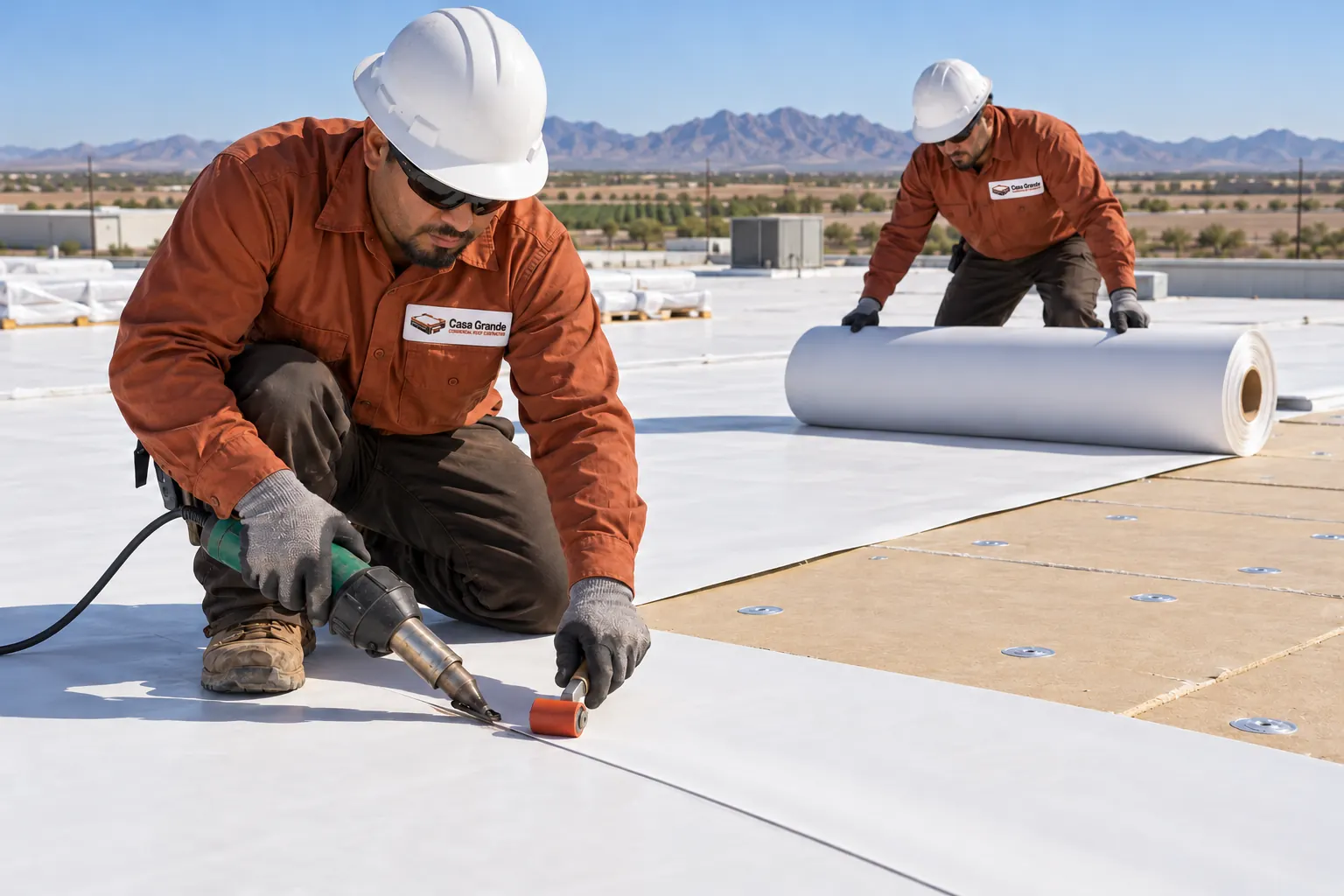
TPO Roofing Contractor
White heat-welded membrane over sales floors and offices, with a flashed curb at every tenant unit.
TPO roofing in Casa Grande
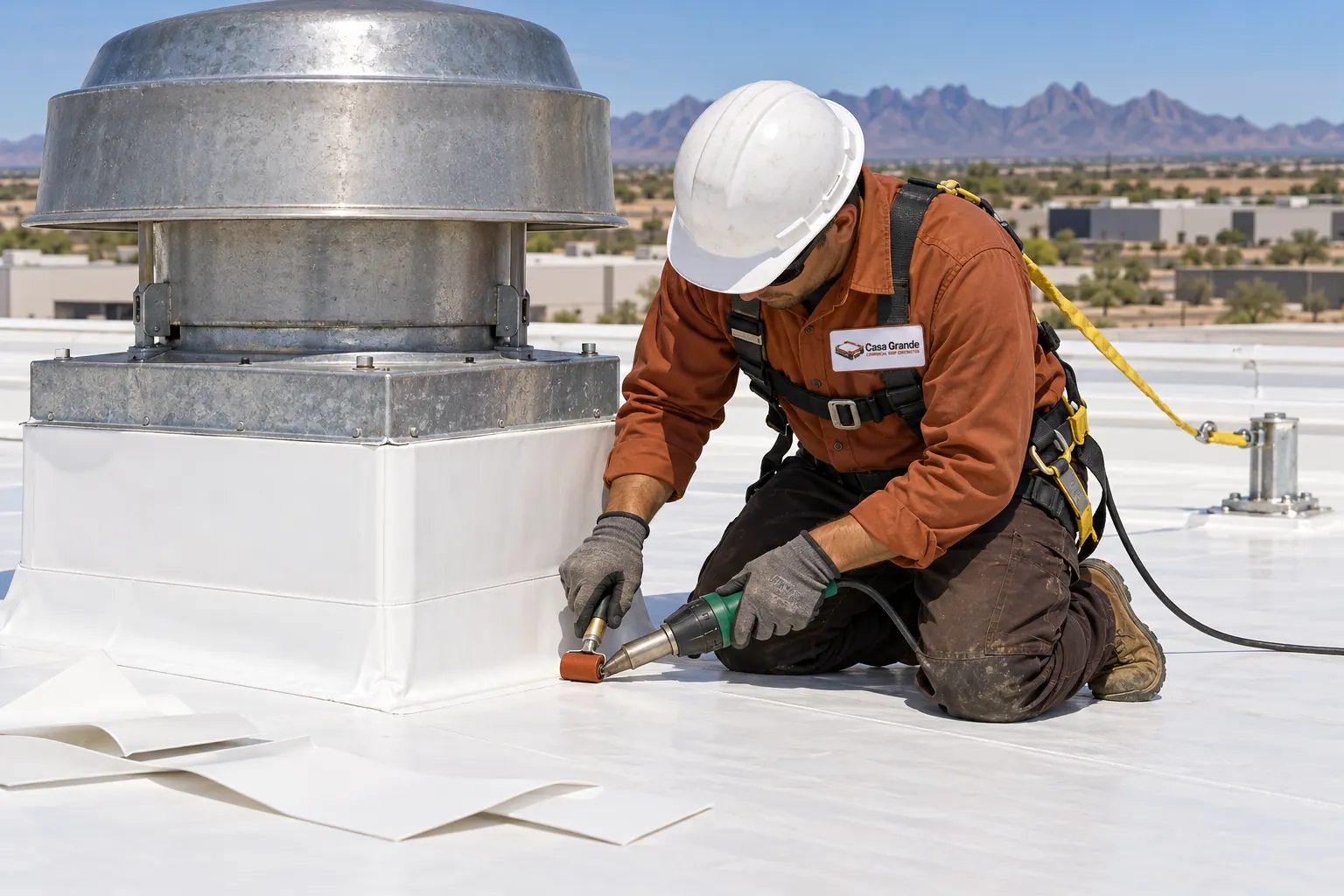
As a Maricopa commercial roofing contractor, we repair and replace retail and office roofs along SR 347, working tenant by tenant so storefronts stay open.
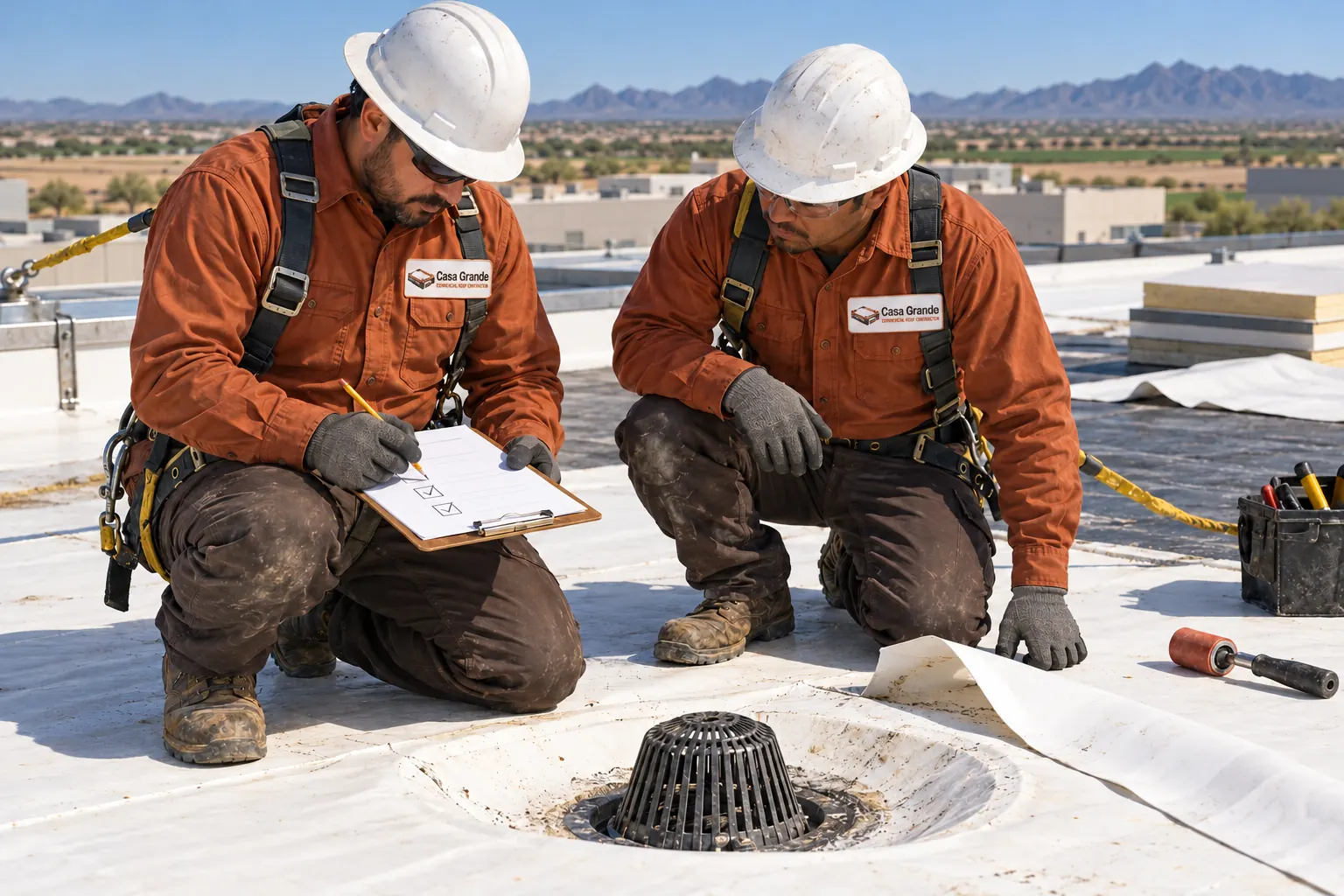
Maricopa incorporated in October 2003, and retail trade makes up about 13 percent of its jobs. Strip centers and offices along SR 347 carry low-slope roofs with a rooftop unit for each tenant space, so a reroof touches every business below it.
We work in sections that follow tenant lines, notify each tenant before noisy or odor-producing work, and keep staging away from entrances and parking. Buildings on Ak-Chin land south of the city follow tribal rules instead of city permits.
In a strip center, one tenant's leak can start over the next unit. These pairs show where to look.
Water shows up where two tenant spaces meet, often on just one side of the wall.
Open Lap Over The Tenant Line: A seam or old patch near the wall between units has opened and lets water run along the deck.
Moisture appears near one store's ceiling diffuser or above its back room.
Cracked Unit Curb Flashing: The curb flashing under that tenant's rooftop unit has split, or a service visit left it damaged.
Drips land just inside the front windows after a windy storm.
Loose Front Parapet Coping: Coping and counterflashing on the front parapet have loosened, letting rain run behind the sign band.
Tiles near the rear service doors sag or stain after heavy rain.
Rear Scuppers Backing Up: Dust and debris block the rear scuppers or downspouts, so water ponds along the back edge of the roof.
A tenant's new sign or unit is followed by a leak that was never there before.
Unflashed New Penetrations: Sign brackets, conduit, or a new unit went through the roof without proper flashing.
For strip centers and offices along SR 347, these four results matter most.
Section-by-section roof work and advance notices let each tenant keep doing business while the roof above is replaced.
Each tenant's rooftop unit gets new curb flashing tied into the membrane, so the next service visit starts from a dry curb.
Rebuilt scuppers and cleared downspouts along the back edge stop water from pooling by the service doors.
A white TPO roof surface cuts afternoon heat over sales floors and offices with the AC running all day.
Retail and office roofs here are mostly low-slope single-ply. Two systems cover them.
White heat-welded membrane over sales floors and offices, with a flashed curb at every tenant unit.
TPO roofing in Casa Grande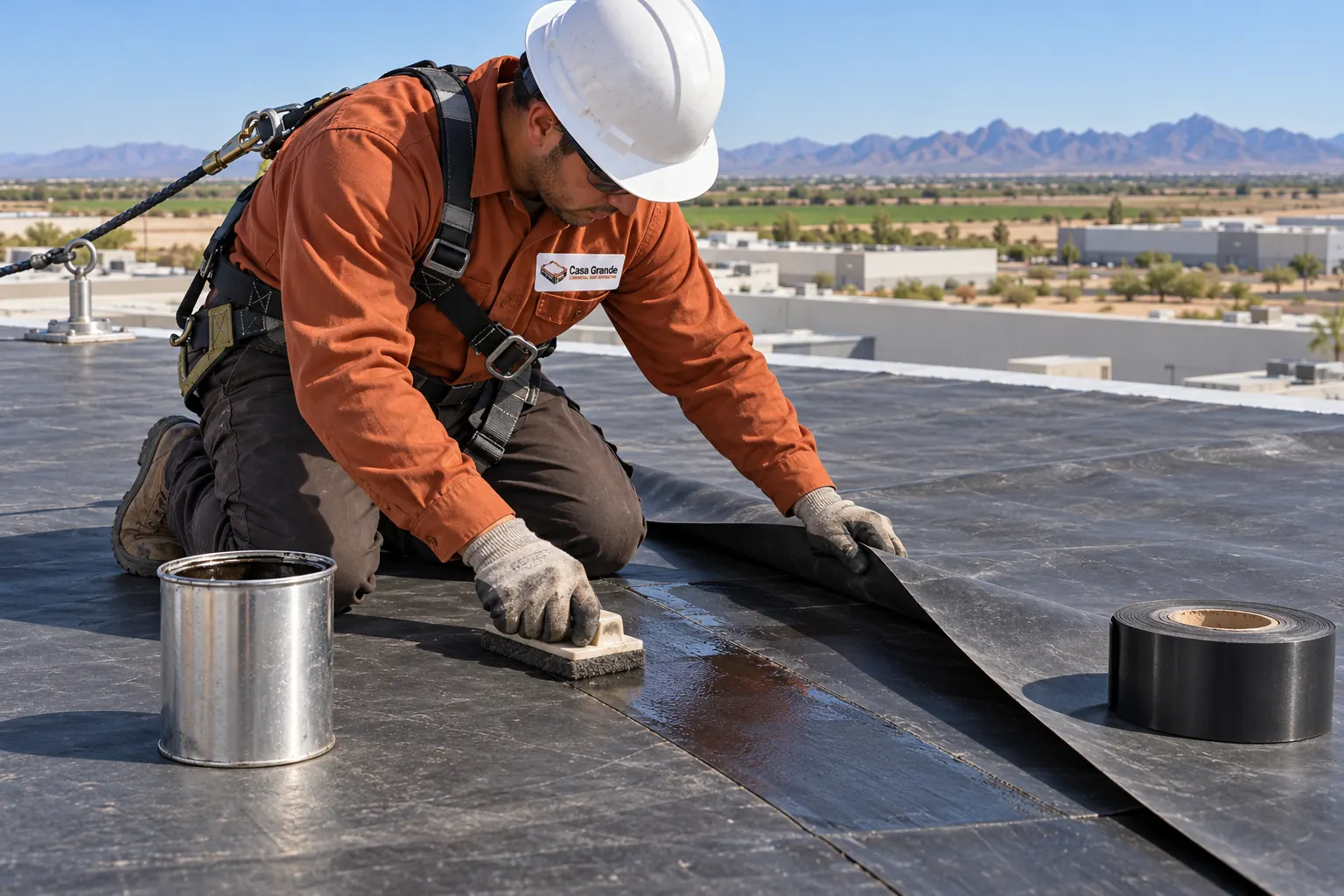
Taped-lap membrane for retail roofs crowded with pipes, vents, and conduit from years of tenant buildouts.
EPDM flat roof installation and repairCall and tell us which unit is wet and what sits on the roof above it. We check that tenant's curb and the seams near the wall first.
Five steps planned so tenants know what is happening above them.
We check each tenant's unit curb, the seams near demising walls, the front coping, and rear scuppers, and cut cores where the membrane feels soft.
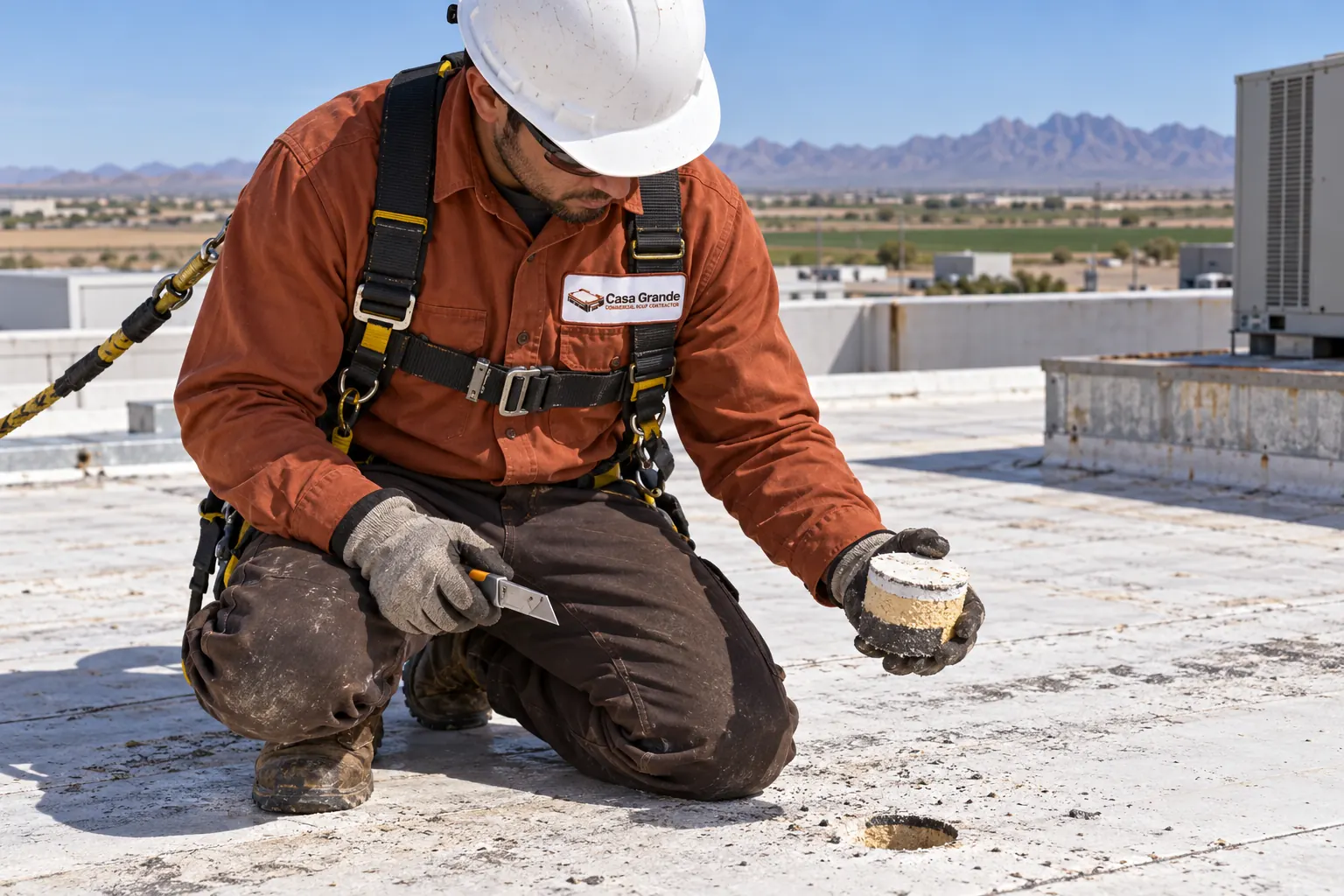
Your summary splits the roof along tenant lines and shows which spaces sit under wet insulation, so the schedule can tackle the worst areas first.
Tenants get notice before noisy work, odor-producing work, or crane lifts, and roof staging stays clear of entrances, parking, and fire lanes.
Each tenant section is torn off or recovered, flashed at its unit and penetrations, and closed before the crew moves to the next.
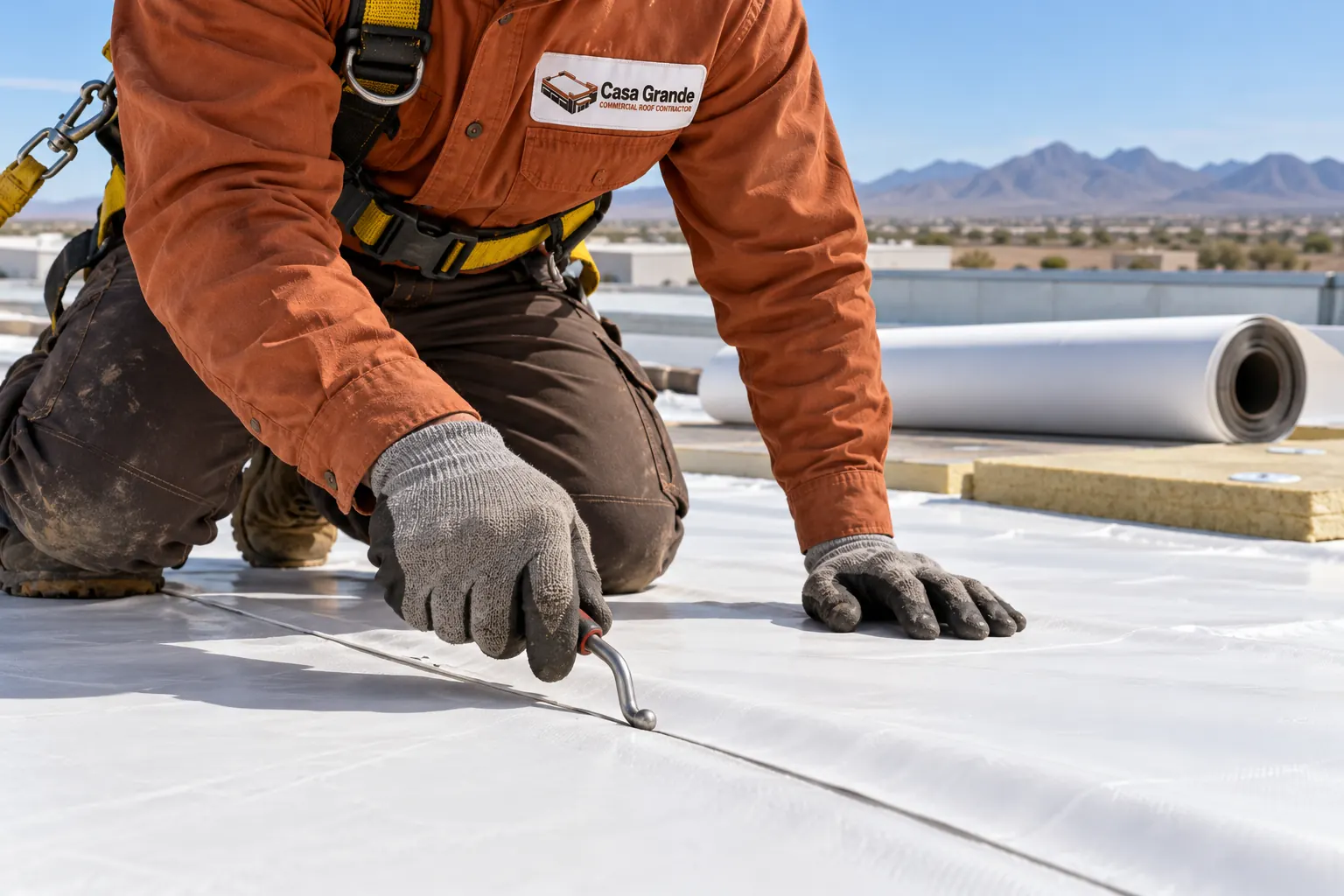
Property management joins the final walk, and every curb and roof penetration is photographed so future tenant work has a starting record.
Maricopa sits at the northwest corner of our area. These towns are the closest we also cover.
South of Maricopa and unincorporated, with metal shop and farm building roofs permitted through Pinal County.
Southeast, with retail strips and wide distribution roofs near Interstates 10 and 8.
Farther south past Casa Grande, where school and church roofs are worked around their busiest hours.
What Maricopa property managers and owners ask before roof work.
In most cases, yes. On a strip center, the roof is worked in sections along tenant lines so stores and offices keep running underneath. Early starts use cooler mornings, staging stays away from entrances and fire lanes, each open section is dried in before the crew leaves, and tenants get notice before noisy or odor-producing work.
The City of Maricopa Development Services, Building Safety division reviews commercial roof work inside city limits. Buildings on Ak-Chin Indian Community land follow tribal rules, so we confirm the authority before scheduling.
Yes, when the rest of the roof is in fair shape. A failed curb or open seam over one space gets repaired on its own, and we note any other weak spots for the owner.
We schedule odor-producing steps for early hours, keep adhesive and primer work away from rooftop air intakes, and coordinate with HVAC service so units near the work can be adjusted.
Have the installer coordinate with the roofer. Every bracket, conduit, and curb that goes through the roof needs flashing tied into the membrane, and unflashed buildout penetrations are a common source of new leaks.
Both work. TPO suits wide roofs over cooled sales floors, and EPDM handles roofs crowded with pipes and vents from past buildouts. We recommend one after seeing the roof and its penetrations.
Some quiet steps can, and noisy work can be set for hours when the center is less busy. Safety lighting and access are planned with property management before any after-hours work.
Keep the inspection photos and the final walk photos, with each unit's curb and penetrations marked. Those records show the next tenant's contractors what was there and how it was flashed.
Send the center's address and which tenants report leaks. We inspect every unit curb and lay out a tenant-by-tenant plan.
Leave a name and number and we will call you back.
Or call now: +1 (623) 310-0221