Commercial Metal Roofing Contractor
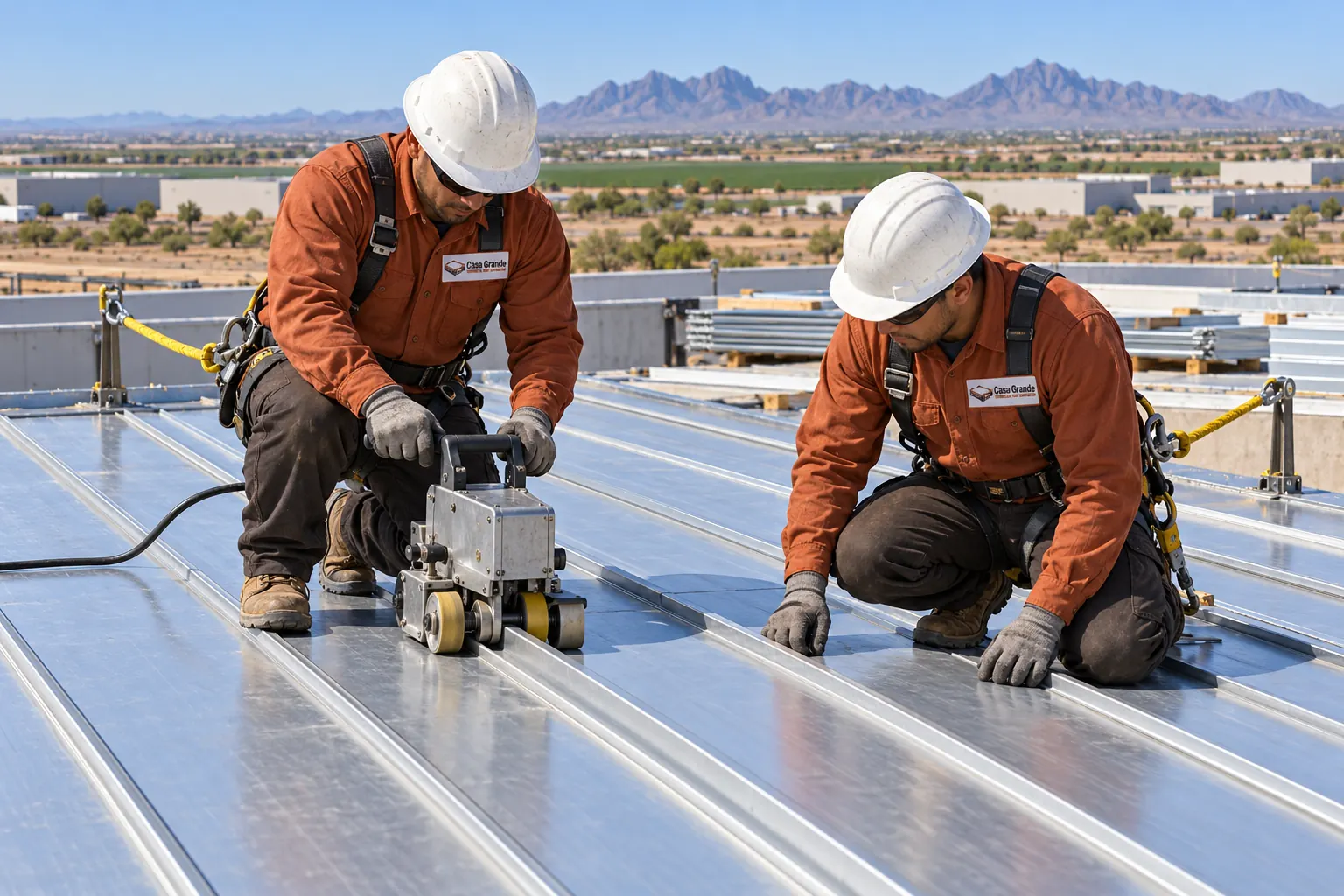
Pre-engineered plant buildings with panel roofs get new metal, or a restoration with fresh fasteners and sealed laps.
commercial metal roof restoration
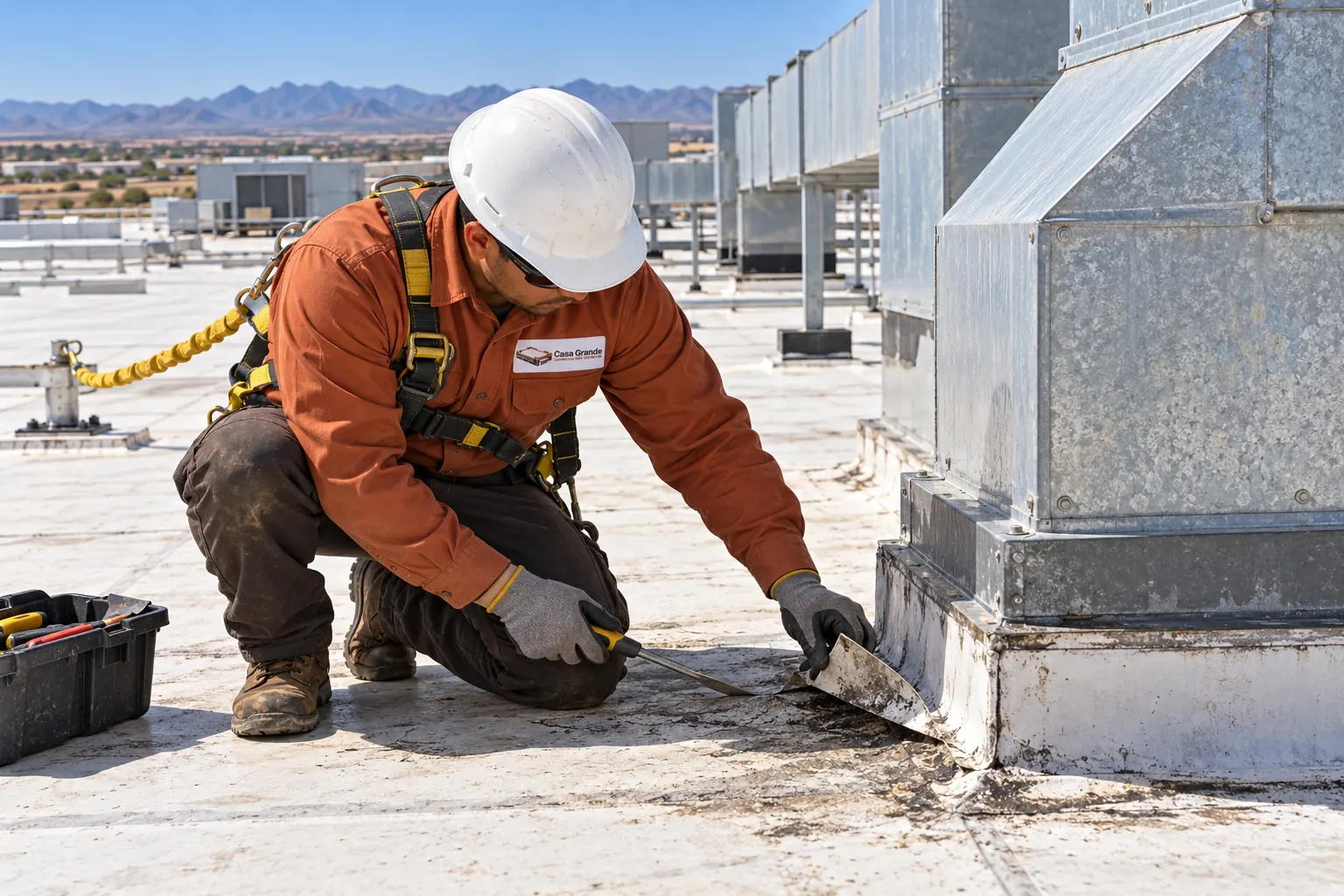
We are an industrial roofing contractor in Casa Grande for plants, processing buildings, and logistics roofs, phasing the work so production and shipping keep moving below.
One roof section open at a time
Fall protection on every edge
Walkway pads to every unit
Industrial roofing is about the building's use as much as the membrane. These signs tell us the roof needs industrial planning.
On plant roofs, the source of a leak is often a piece of equipment. These pairs connect what crews see inside to the roof detail above.
Water lands on equipment or product near a duct penetration, sometimes only during heavy rain.
Failed Duct Curb Flashing: Flashing at the base of a large duct has split or pulled away as the duct shifts with heat.
Dark film or staining builds up on the underside of the deck near an exhaust outlet.
Exhaust Attacking The Membrane: Process exhaust and chemical exposure soften or stain the membrane around stacks and fans.
New stains show up near units in the weeks after contractors service the rooftop equipment.
Worn Service Paths: Heavy foot traffic around HVAC and fans has scuffed through the membrane where no walkway pads were laid.
A puddle forms under the roof hatch or ladder after storms, right where crews enter the roof.
Cracked Hatch Curb Seal: Sealant at the hatch base has dried out, and the curb flashing has lifted from years of being stepped on.
Orange staining shows on joists or deck flutes above a process area.
Standing Water Behind Equipment: Water ponds behind large units or ducts that block the drainage path to the drains.
Industrial scopes range from targeted fixes around equipment to full replacement done in phases.
| Scope | When it fits | What it involves |
|---|---|---|
| Equipment-area repairs | Leaks trace to duct curbs, stacks, or fan bases | New curb flashing, membrane patches rated for the exhaust, and walkway pads |
| Phased replacement | The roof needs replacing while production keeps running | Sections opened and closed one at a time, scheduled around shifts and shipping |
| Membrane or coating matched to exhaust | Process exhaust or chemical exposure is wearing the roof | A membrane or industrial-grade coating chosen for that exposure near stacks and fans |
| Walkway and access upgrade | Service traffic has worn paths in the membrane | Walkway pads, reinforced areas at units, and safer routes from the hatch |
These four results come from planning the roof around the work that happens under it.
Phasing keeps production running while one section of roof is open at a time.
Walkway pads and reinforced membrane around HVAC and fans take daily foot traffic instead of the field sheet.
Membrane or coating near stacks is selected for the exhaust it will face, so the seal around each curb lasts longer.
Fall protection, lockout coordination, and planned access points are set before work begins on any part of the roof.
Call and tell us which line or machine sits under the drip. We check the curbs and ducts above it first.
Plant roofs add safety and scheduling steps. These five steps build them into the job from the start.
Ducts, stacks, fans, curbs, and walk paths get checked along with the field membrane, and core cuts near process areas show whether insulation stayed dry.
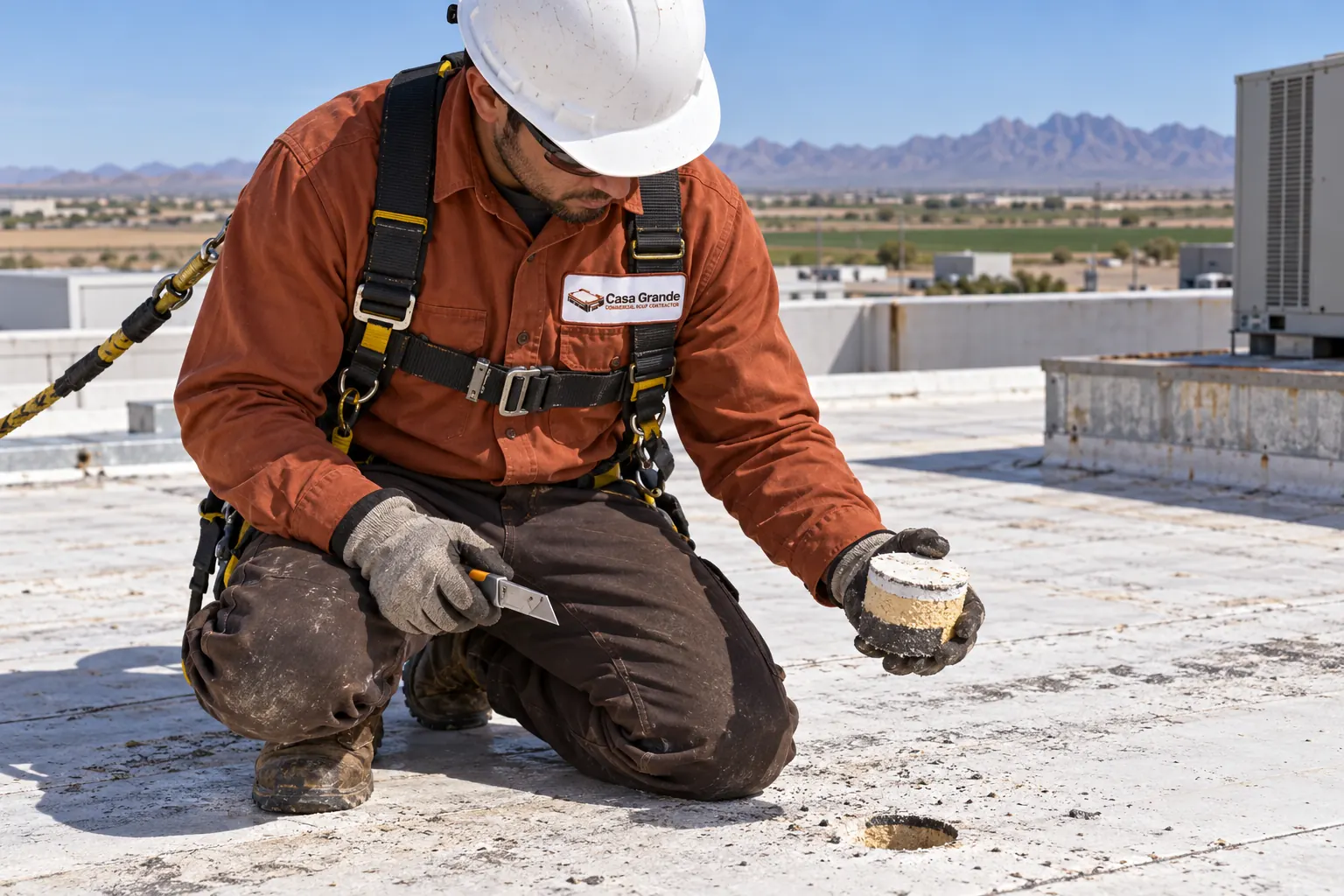
Fall protection, tie-off points, lockout coordination with your maintenance staff, and the roof access points are agreed before anyone starts work.
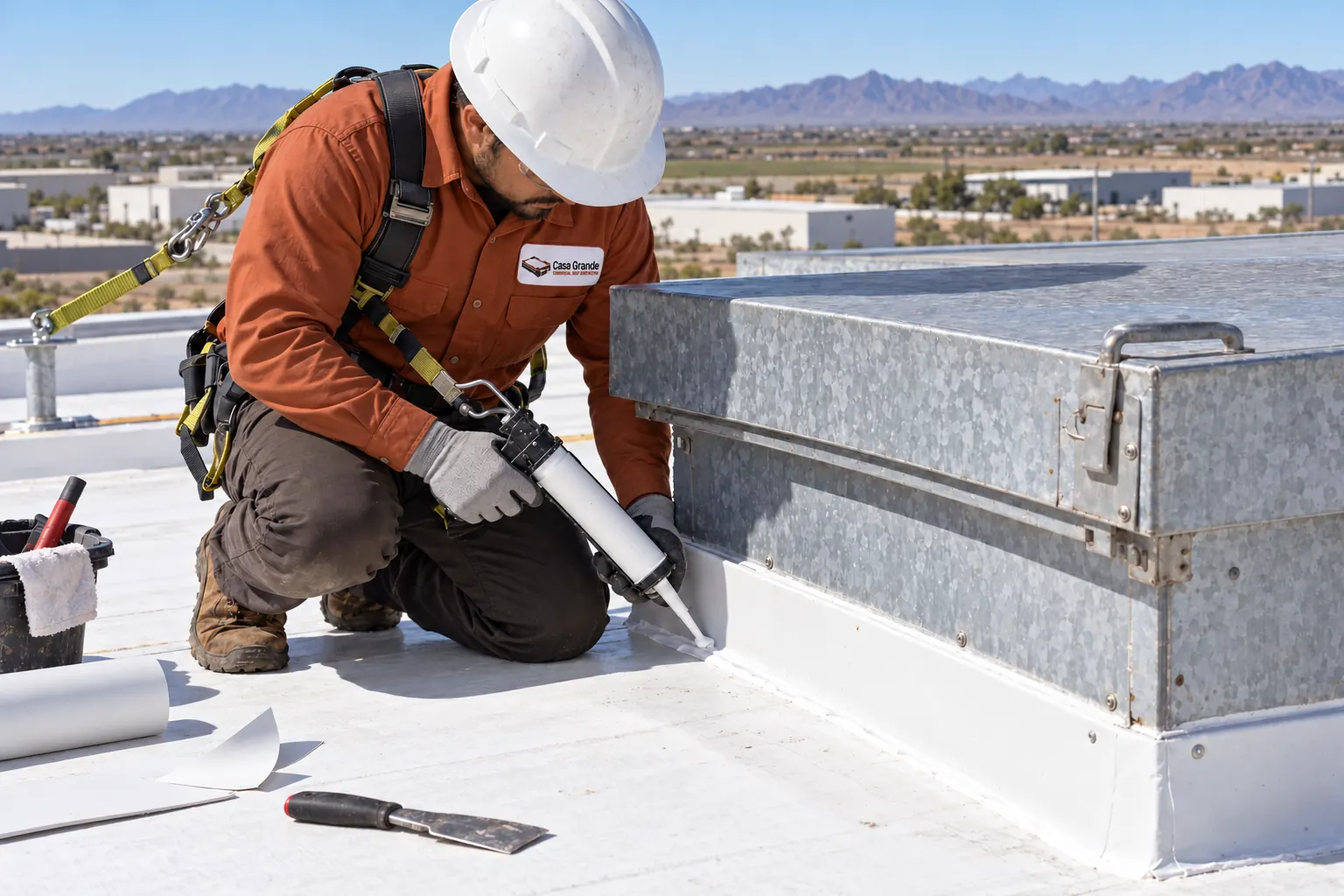
The roof is split into sections scheduled around shifts, shipping windows, and any equipment shutdowns you already have planned.
Each section gets new insulation and membrane, exhaust-matched material near stacks, and walkway pads along the service routes.
We walk the roof with your maintenance lead, mark the walk paths, and photograph every curb and duct flashing for your records.
Plant campuses often mix roof types. These two systems show up most often beside industrial work.
Pre-engineered plant buildings with panel roofs get new metal, or a restoration with fresh fasteners and sealed laps.
commercial metal roof restoration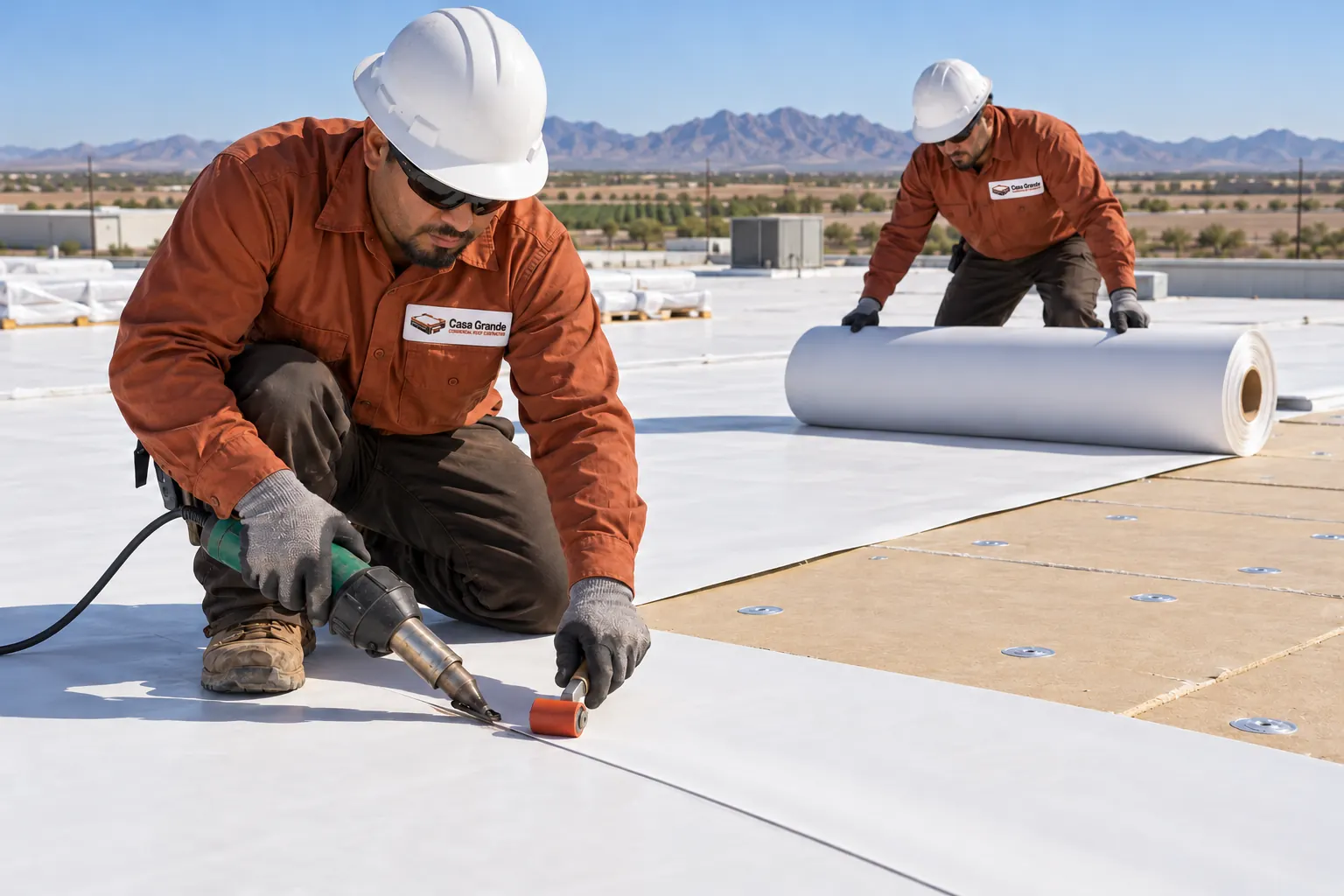
Distribution buildings beside the plant often fit white TPO, with welded seams across wide, low-slope decks.
TPO roofing in Casa GrandeAnswers for plant managers and facility staff.
Large, equipment-heavy roofs where safety rules and production schedules shape every step. That means membrane or coatings chosen for process exhaust, walkway pads and reinforced areas at HVAC and fans, fall protection and lockout coordination, and phasing that keeps one section open at a time.
Yes. Sections are scheduled around shifts and shipping, and the crew stays clear of intakes and lines your staff flags. Noisy or odor-producing work gets advance notice so you can plan around it.
Yes. Before work near fans, exhaust, or electrical equipment, we agree on lockout steps with your maintenance staff, and nobody touches that equipment's curb until it is locked out and confirmed.
That depends on the exhaust. Grease, solvents, and chemicals each affect membranes differently, so we look at what comes out of each stack and choose a membrane or industrial-grade coating rated for it.
We plan staging around the access points you have, often a single hatch or ladder. Materials go up by lift or crane at agreed times, and the hatch curb gets checked and resealed as part of the job.
Yes, on a membrane in fair shape. Pads are welded or adhered along the routes to units, fans, and the hatch, and any worn spots underneath are repaired first.
Twice a year, in spring and fall, and after major storms. Plant roofs also need a look after any equipment install or removal, since new penetrations and crane lifts are common sources of damage.
Tell us the roof size, the equipment on it, and your production schedule. We inspect and lay out a phased plan before pricing.
Leave a name and number and we will call you back.
Or call now: +1 (623) 310-0221