TPO Roofing Contractor
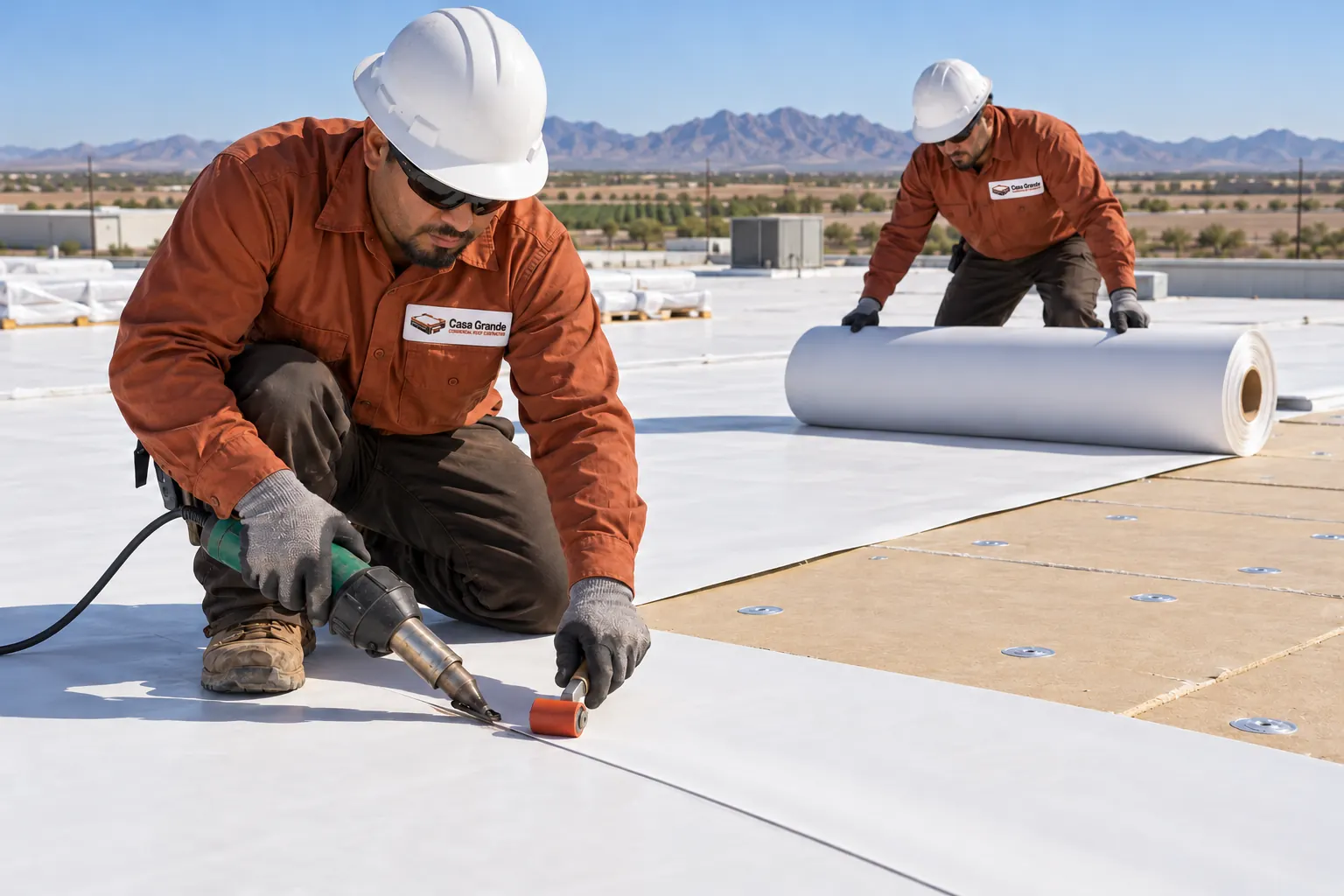
Wide warehouse decks with long seam runs get white, heat-welded TPO with extra securement along the dock-side edges.
TPO roofing in Casa Grande
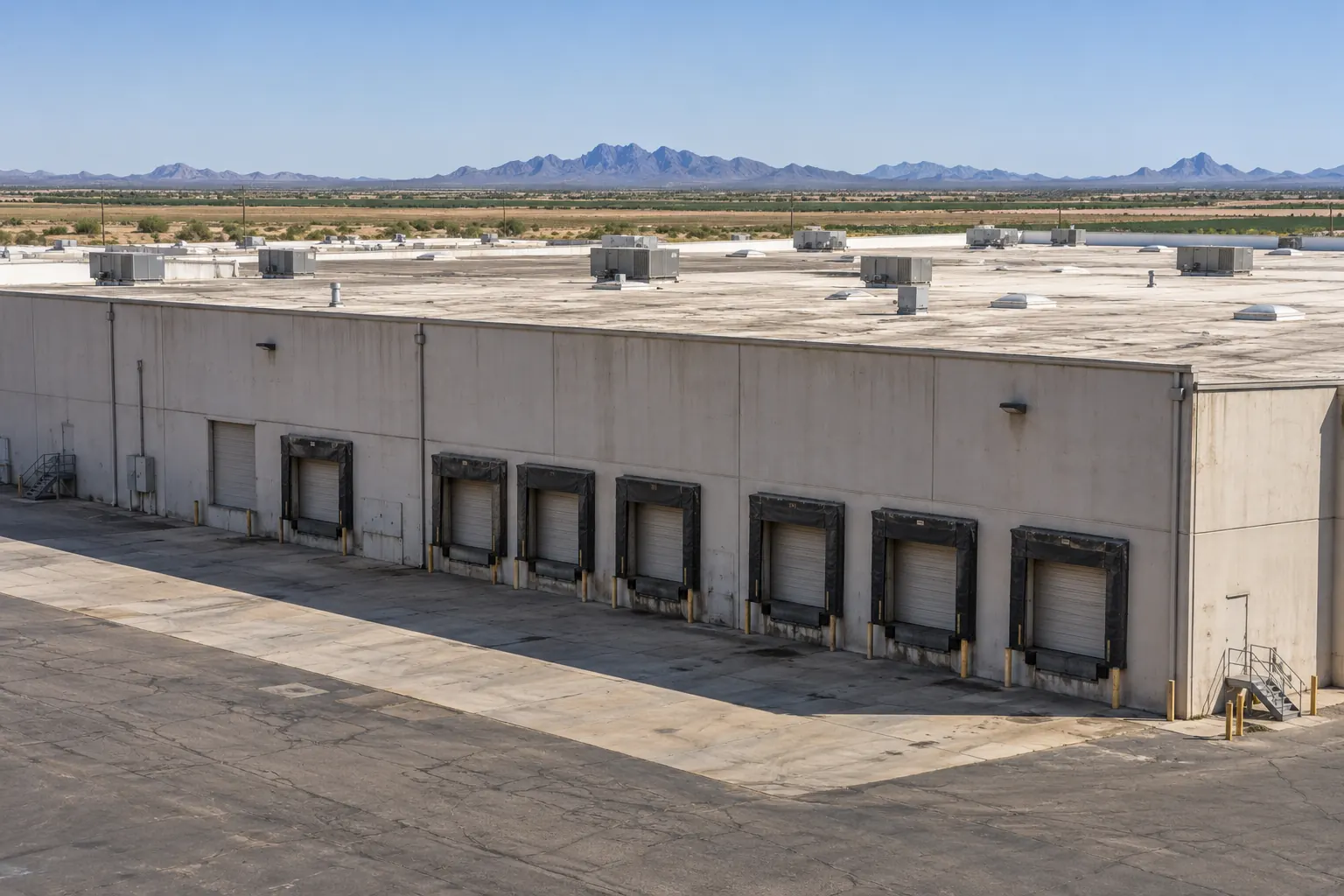
As a Coolidge commercial roofing contractor, we replace and repair warehouse and plant roofs across the city's industrial parks, one bay at a time around your dock schedule.
Coolidge, incorporated in 1945, is home to the Inland Port of Arizona plus the Coolidge, Union Pacific Railroad, and Randolph industrial parks. Warehouse and plant buildings there carry wide, low-slope roofs with long drain runs and dock-side rooftop units.
On a roof that size, the job is planned bay by bay. Each section is opened, insulated, and closed around truck arrivals and rail loading, and drains get cleared before monsoon storms reach them.
Large warehouses hide roof trouble until it reaches stored goods. These pairs link what shows up inside to its source above.
Product or shrink wrap gets wet in a single aisle after rain, while the rest of the floor stays dry.
Clogged Or Sunken Drain: Dust and debris pack a drain strainer, or the sump has sagged, so water backs up and finds a seam.
Water drips into the dock leveler pits or along the wall above the overhead doors.
Failed Edge At The Dock Wall: Edge metal and wall flashing above the docks have loosened, letting wind-driven rain run behind them.
Ceiling or deck stains gather near the rooftop units that cool shipping offices along the docks.
Cracked Curb Seals: Sealant and flashing at the unit curbs have split after years of sun and service traffic.
Odor and rust-colored drips appear in back aisles far from any exterior wall.
Wet Insulation Mid-Roof: Water from an old puncture has spread through the insulation in the field, where the deck sags between joists.
Offices built on mezzanines under the roof run hot through summer afternoons.
Aged Gray Or Black Surface: The roof surface has weathered dark and soaks up heat right over the cooled office space.
For warehouse roofs in the industrial parks, these four results matter most.
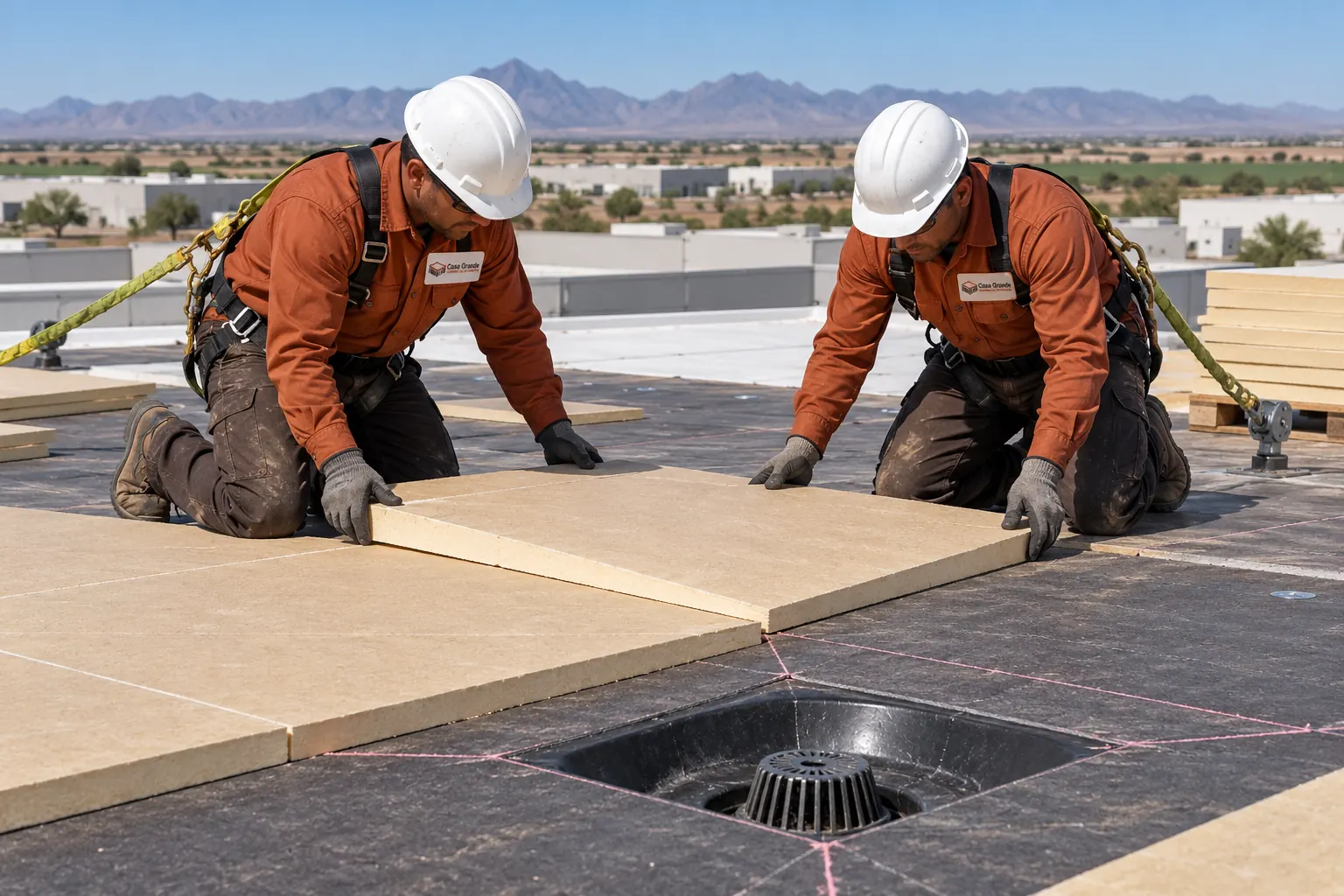
Tapered insulation and cleared sumps send water off wide roofs before it finds a seam during heavy monsoon bursts.
Bay-by-bay phasing keeps trucks loading while the roof section above another aisle is replaced.
A white TPO surface over the mezzanine and office areas cuts afternoon heat gain under the roof.
Walkway pads to the dock-side units keep service visits from wearing holes in the new membrane.
Two systems cover most of the warehouse and plant roofs we see in Coolidge's industrial parks.
Wide warehouse decks with long seam runs get white, heat-welded TPO with extra securement along the dock-side edges.
TPO roofing in Casa Grande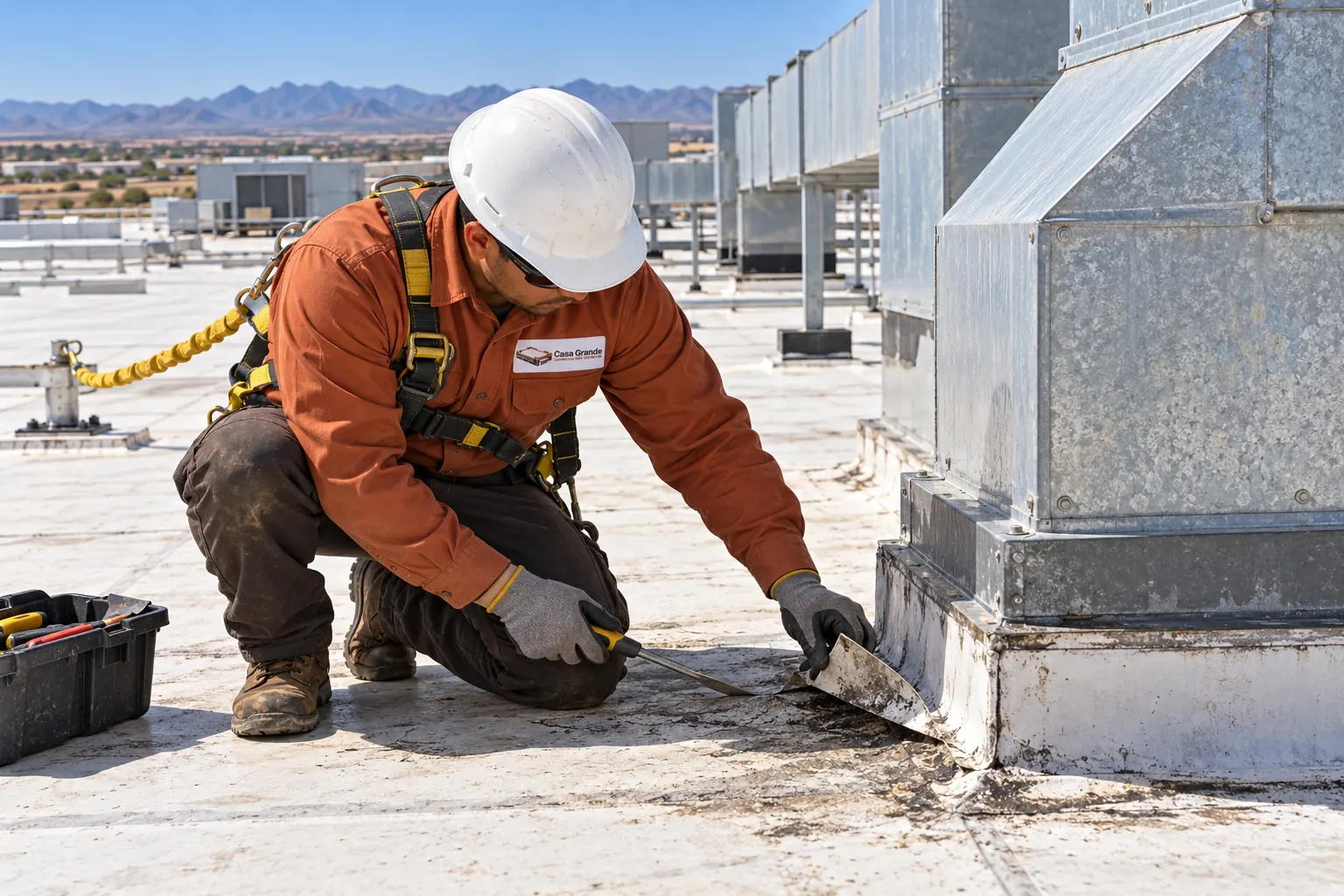
Plant buildings with ducts, fans, and production lines get phased roof replacement and reinforced walk paths.
industrial roofing for plants and warehousesCall and tell us which aisle or dock door is wet. We start at the drains and curbs above that bay.
Five steps, planned around your dock and rail schedule.
We walk every bay, open the drain strainers, check dock-wall edges and unit curbs, and cut cores to map where the insulation is wet.
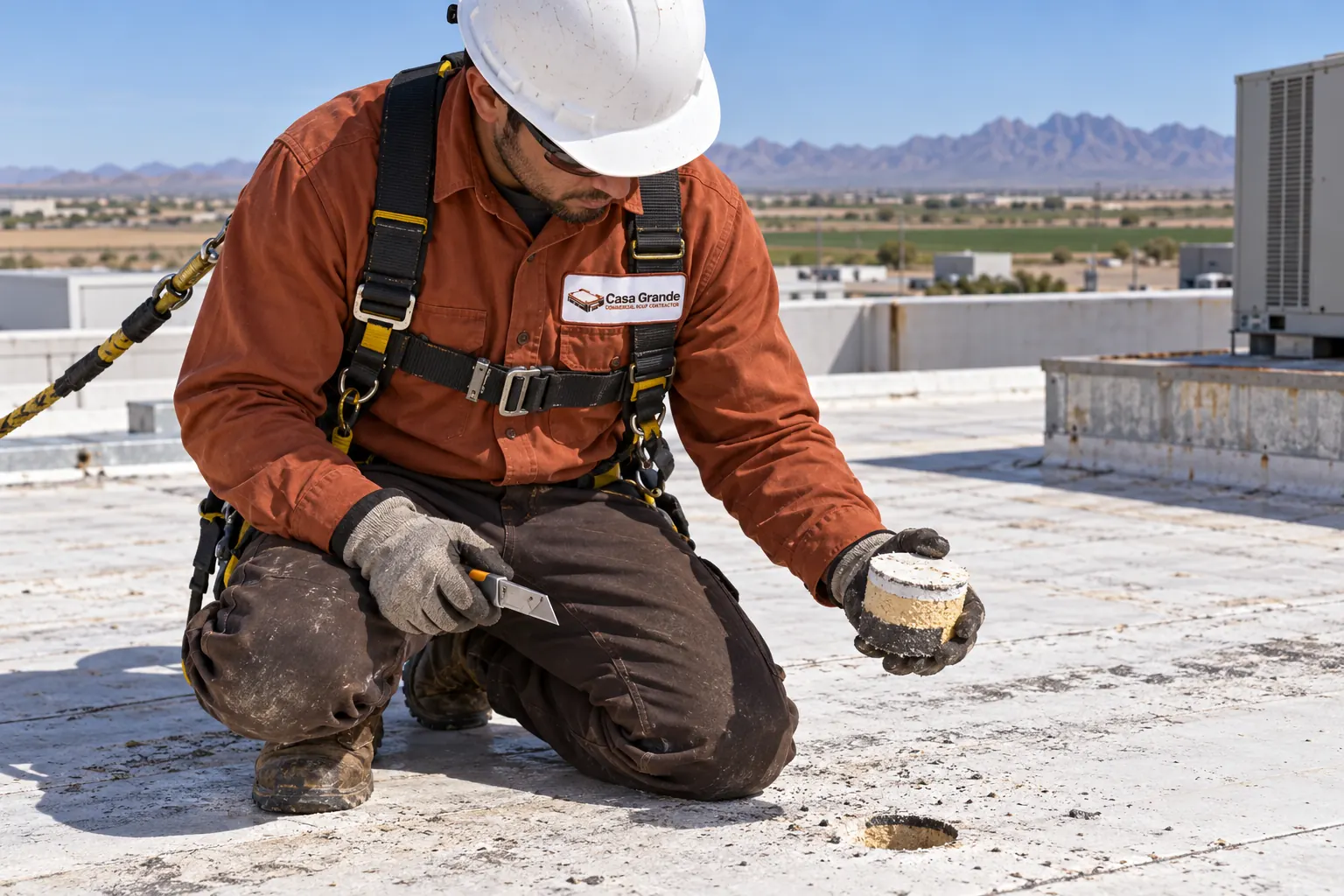
The roof is divided into sections that match your aisles and docks, and your summary shows which bays need tear-off and which can be recovered.
Lifts, dumpsters, and material drops go where trucks never need to turn, and the shipping office gets the roof section schedule in advance.
Each bay is torn off, insulated with tapered boards toward its drain, and closed under new membrane before the crew moves to the next.
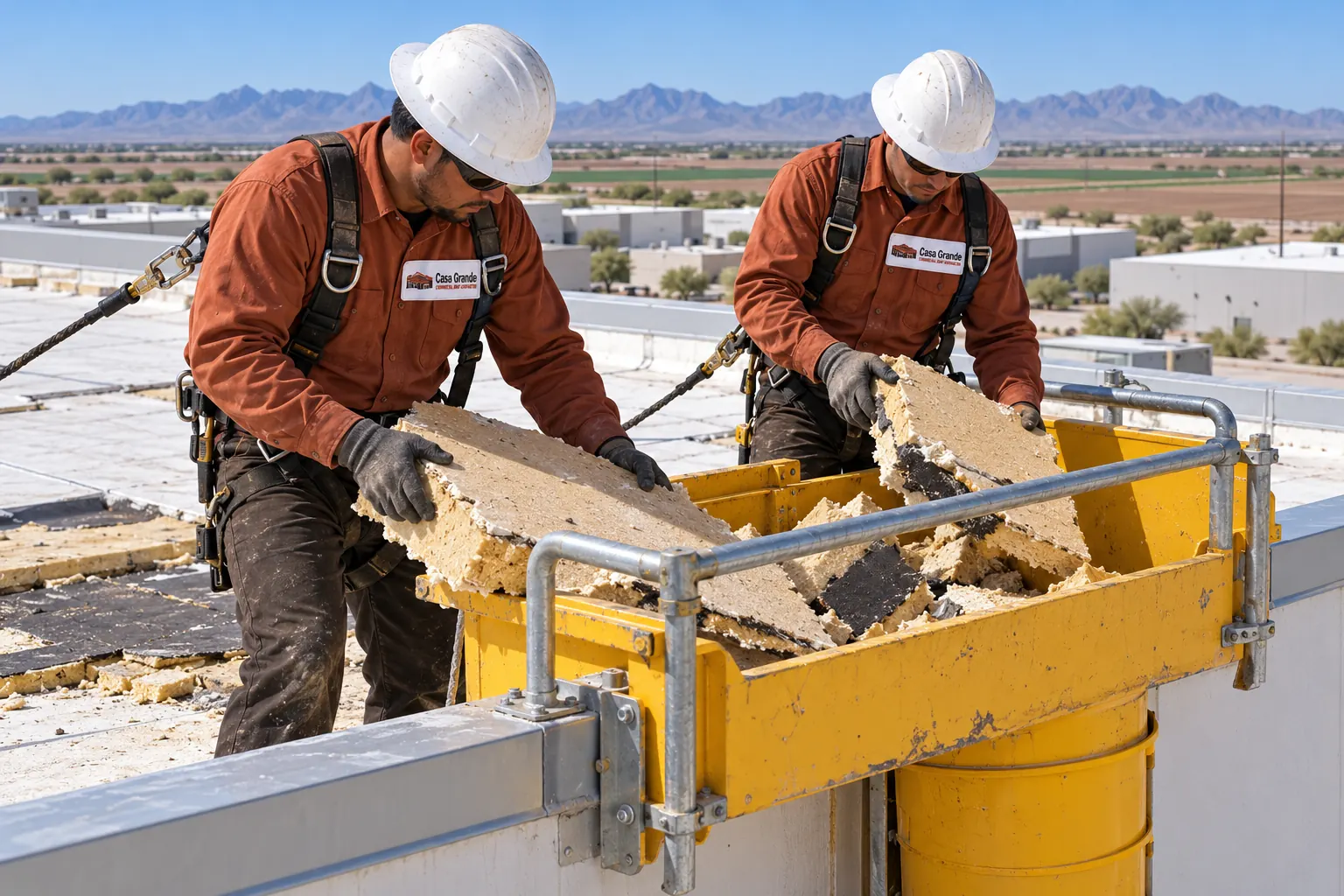
Drain sumps and strainers are cleaned and checked on the final walk, and you get photos of every roof bay for your maintenance records.
Coolidge sits between Florence and Casa Grande, and we roof commercial buildings in all three nearby towns.
Next door to the northeast, where downtown roofs behind parapets also face historic design review.
South toward the I-10 corridor, with fabrication shops and hangar-style metal roofs near its airport.
Southwest of Coolidge, where distribution roofs cluster near the I-10 and I-8 interchange.
What Coolidge warehouse and plant owners ask before roof work.
The National Weather Service sets Arizona's monsoon season as June 15 through September 30. Before mid-June on a warehouse roof, clear dust and debris from every drain and scupper, check the edge metal above the docks for loose fasteners, look for open laps near unit curbs, and make sure no unit panels are missing.
The City of Coolidge building department, since Coolidge is an incorporated city. Reroofing a commercial building usually needs a permit there, and we confirm the requirements for your scope before work is scheduled.
Yes. The roof is split into bays, and each one is opened and closed on its own schedule. Staging stays out of truck lanes, and the shipping office gets the section plan ahead of time.
It depends on the cores. A dry, single-layer roof over a solid deck can often take a recover, which avoids most tear-off. Wet insulation across large areas or a second layer means the old roof comes off in those bays.
Wide, nearly flat decks sag slightly between joists over time, and drains sit far apart. Tapered insulation and crickets add the slope that moves water to each drain.
White TPO is a common choice. Its reflective surface cuts heat over the mezzanine or office, and the same membrane covers the rest of the roof in one system.
Yes. Lifts and roof work get scheduled around rail loading the same way they are around truck docks, and staging stays clear of the spur.
Twice a year, in spring before monsoon and in fall after it, plus after major storms. Large roofs also need a check after any new rooftop unit or solar install.
Send the roof size and the bays where water shows up. We inspect each section and give you a phased plan with photos.
Leave a name and number and we will call you back.
Or call now: +1 (623) 310-0221