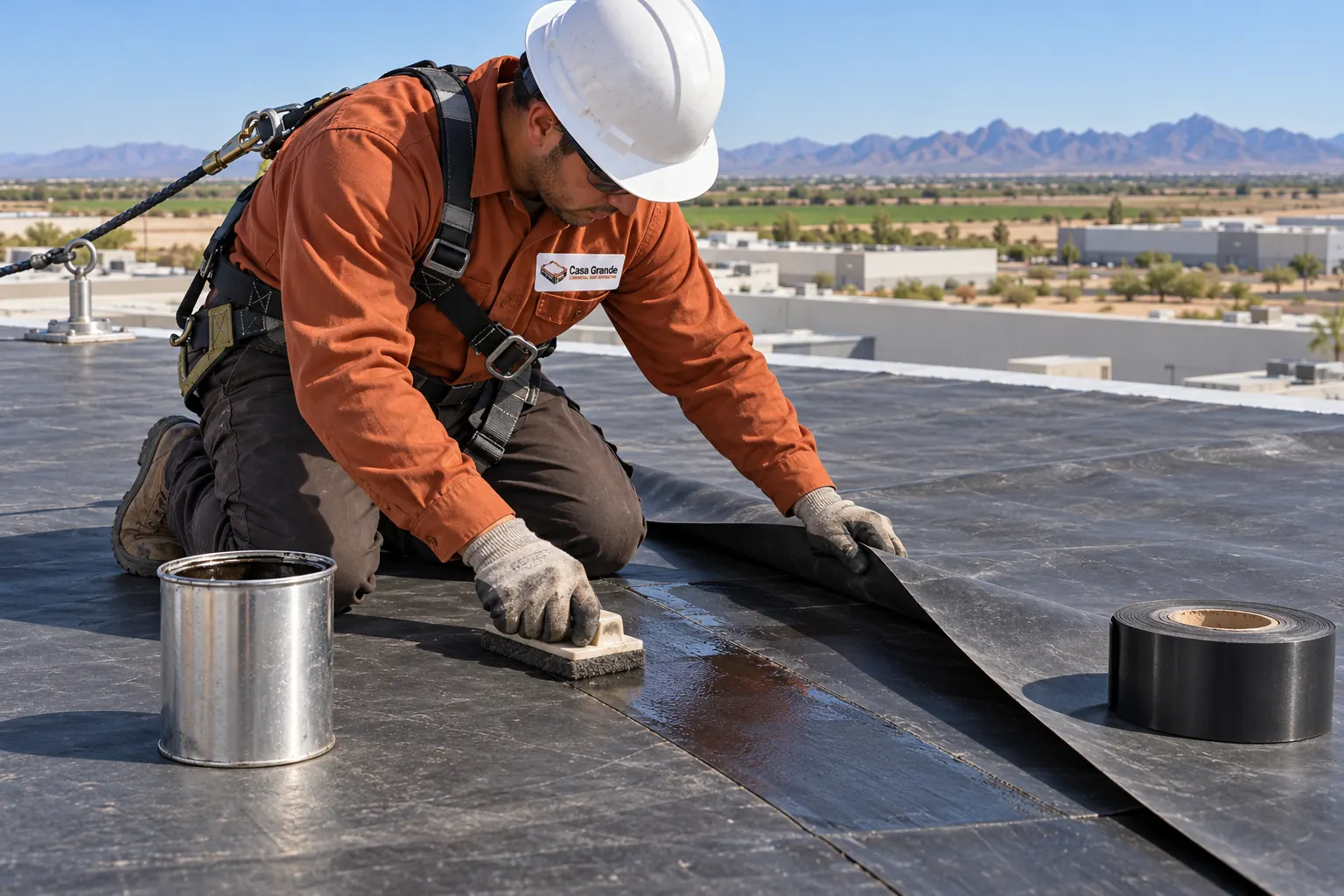
EPDM Roofing Contractor
Flexible membrane with taped laps and snug pipe boots for roofs with many vents from restrooms and kitchens.
EPDM flat roof installation and repair
As an Arizona City commercial roofing contractor, we repair and replace roofs on churches, schools, community halls, and small retail buildings, scheduled around the hours they are in use.
Arizona City is an unincorporated community, so commercial roof permits go through Pinal County Development Services, Building Safety. Churches, schools, and community buildings fill up on set days and hours, and the roof schedule follows that calendar.
Loud tear-off and odor-producing steps go on days the building is empty or lightly used, and every open section is dried in before people return. Entrances and walkways stay clear of staging.
Buildings used a few days a week can hide a leak for days. These pairs help staff spot one early.
A fresh ceiling stain shows up on Monday in a classroom or hall that sat closed through a storm.
Open Seam Over The Room: A lap or old patch above that room has opened, and the leak ran unnoticed while the building was empty.
An odor builds in one room, often near a ceiling diffuser or the HVAC return.
Cracked Pitch Pan Or Curb: Mastic in a pitch pan or around a unit curb has cracked, letting a little water in with each rain.
Drips land in a corridor or entry, where foot traffic turns them into a slip hazard.
Ponding Near A Blocked Drain: Dust and leaves block a drain or scupper, so water sits on the roof and finds a seam nearby.
Paint bubbles or peels around a restroom or kitchen vent pipe.
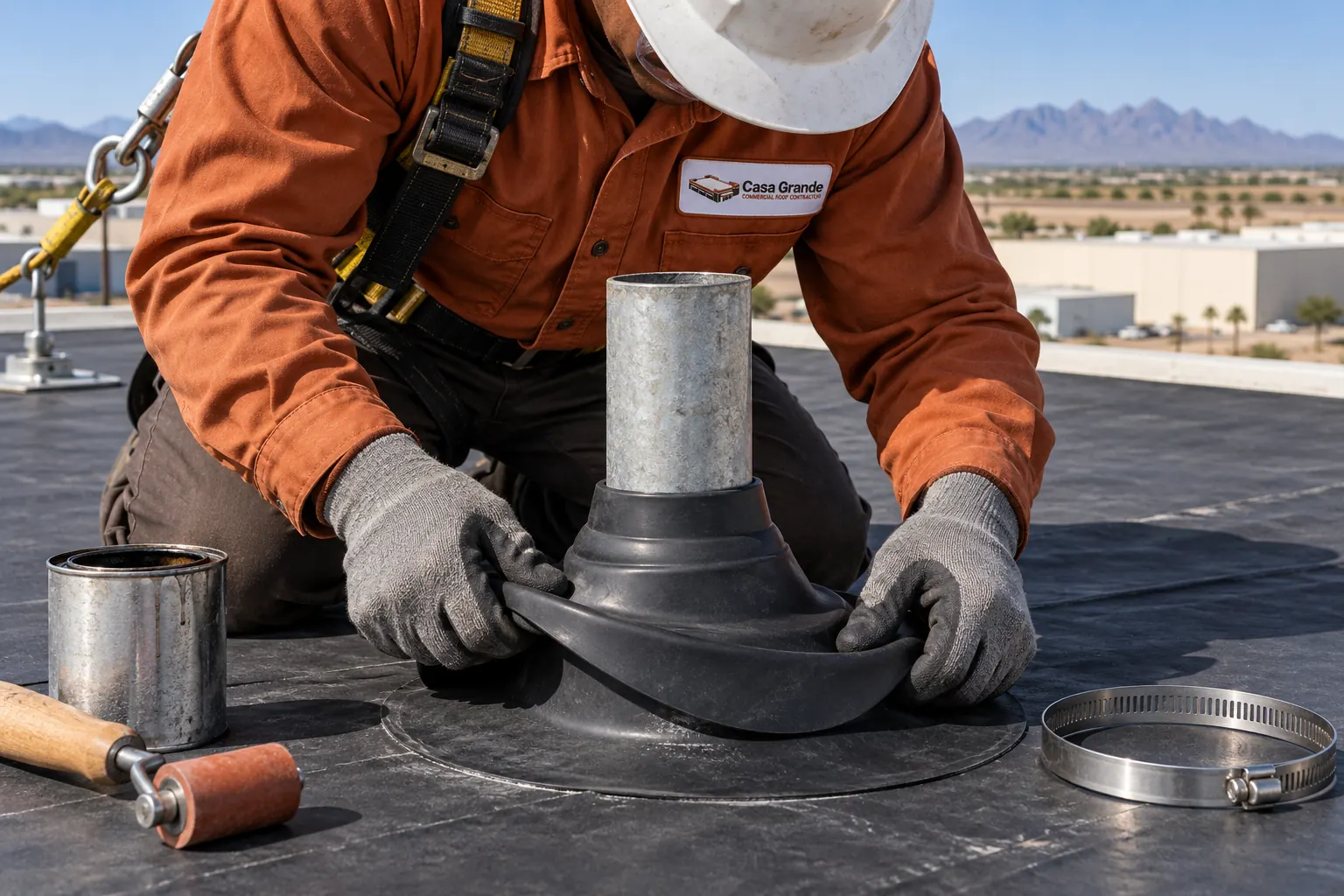
Dried-Out Vent Boot: The boot around that vent has dried out and split, or its clamp has slipped down the pipe.
Classrooms and halls under the roof feel hot by afternoon, even with the AC running.
Weathered Roof Surface: The roof surface has aged dark or chalky and pulls heat into rooms with little insulation above.
For churches, schools, and community buildings, these four results matter most.
Scheduling loud and odor-producing roof steps for empty days keeps services, classes, and events running as planned.
New flashing at vents and curbs closes the slow leaks that go unnoticed in rooms used only a few days a week.
Cleared drains and new scupper flashing keep water from sitting near seams between storms.
A reflective roof surface lowers afternoon heat in classrooms and halls under the roof.
Smaller commercial and community roofs here are usually low-slope membrane or metal. These two come up most.
Flexible membrane with taped laps and snug pipe boots for roofs with many vents from restrooms and kitchens.
EPDM flat roof installation and repair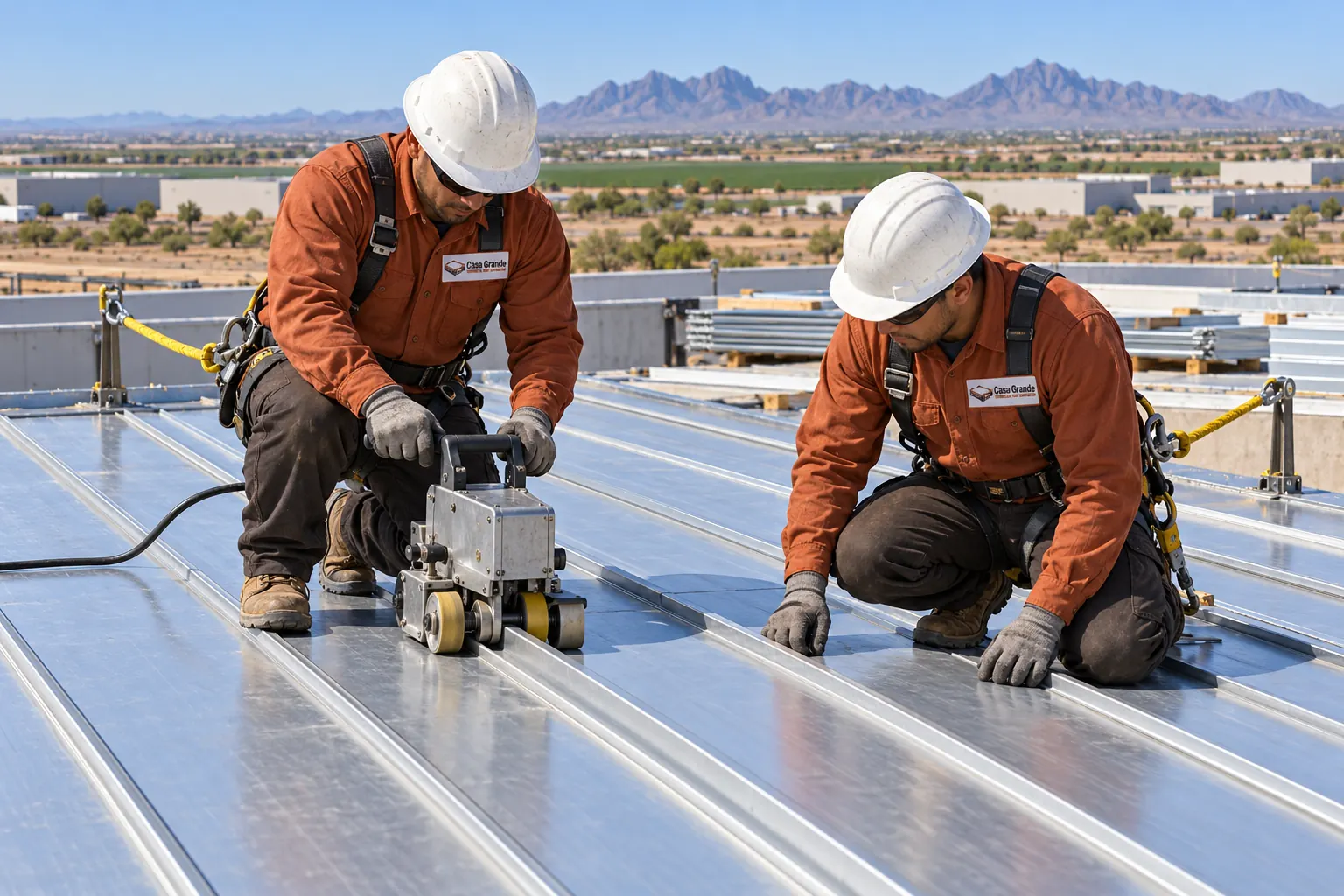
Panel roofs on halls and shops get new fasteners, sealed laps, and a reflective coating, or new panels where rust has gone through.
commercial metal roof restorationCall and tell us which room and what sits above it. We check the seams, vents, and drains over that space first.
Five steps planned around the days your building is in use.
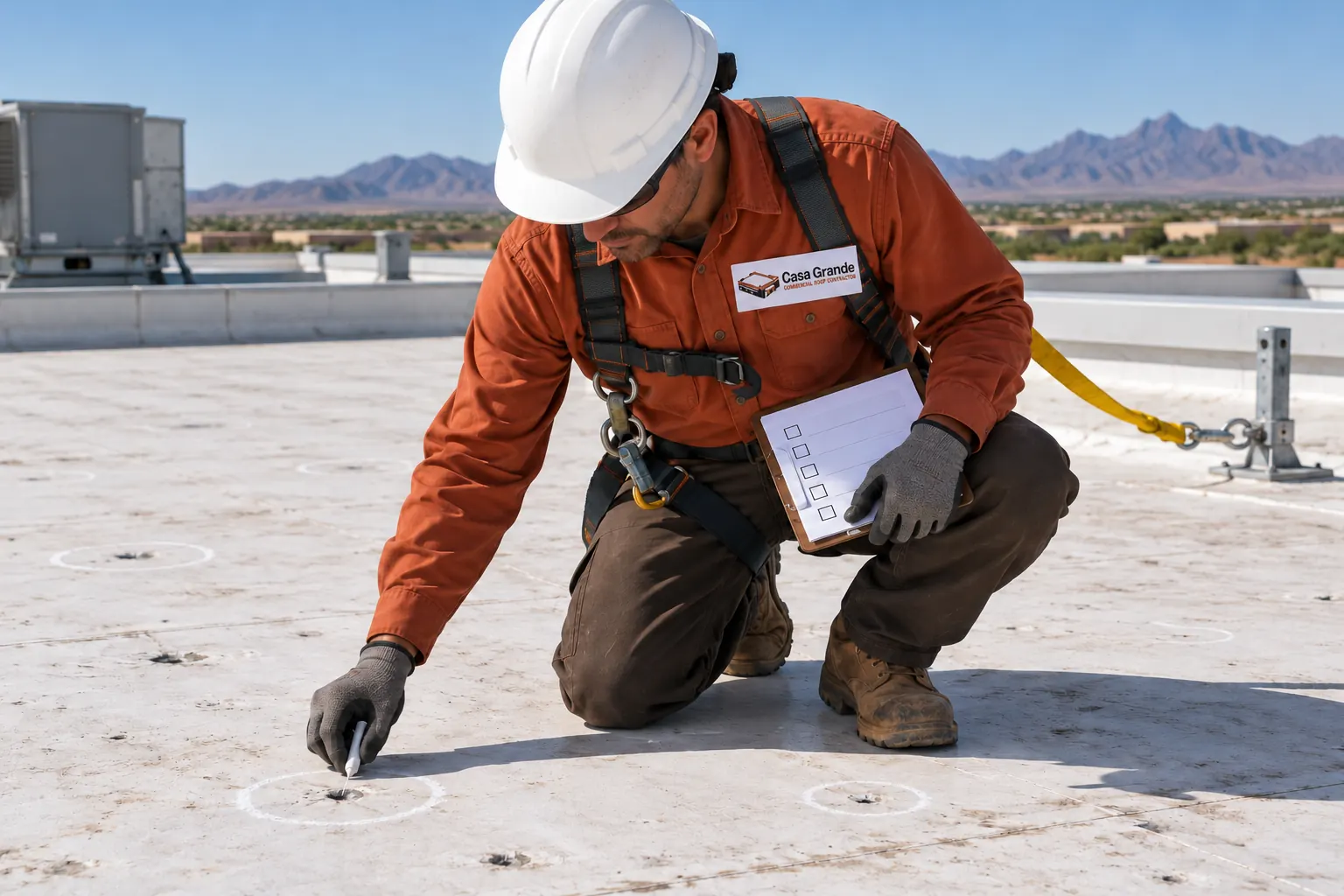
We check the membrane, vents, unit curbs, drains, and edges on a day the building is quiet, and cut cores where the roof feels soft.
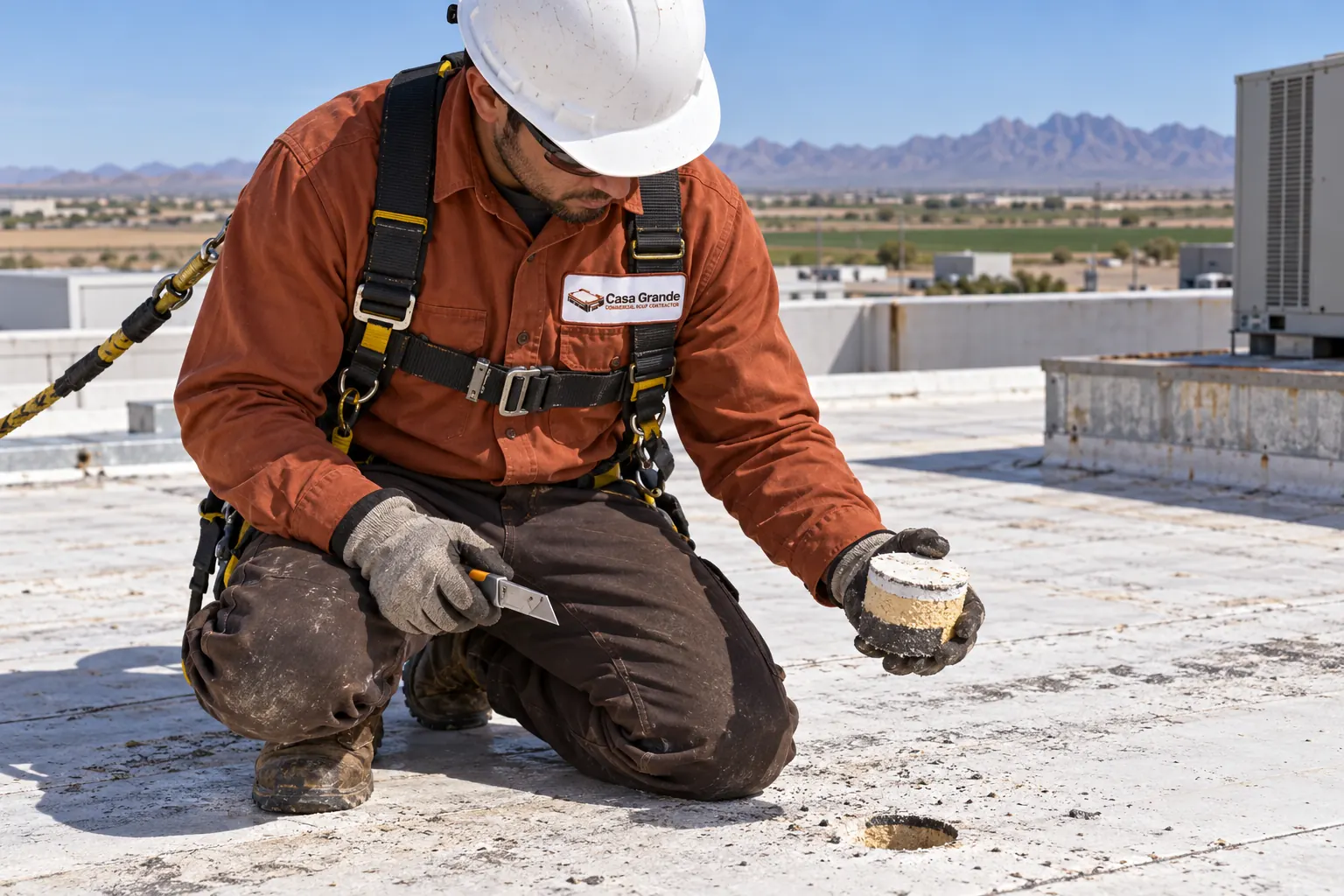
Your summary pairs each roof section with the days it can be worked, based on your service, class, and event schedule.
Pinal County Building Safety handles the permit for unincorporated Arizona City, and we confirm what the county needs for your roof scope.
Tear-off, adhesives, and lifts happen on empty or light days, and each open roof section is closed before people come back.
After the final walk, staff get photos and a short list of what to check after storms, such as drains, vent boots, and unit curbs.
Arizona City sits just south of Casa Grande. These are the closest towns we also cover.
North of Arizona City, with retail and distribution roofs across the city.
East, where long metal panel runs cover shops and highway businesses on I-10.
Northwest, another unincorporated community where Pinal County permits apply as well.
What Arizona City building owners and facility staff ask.
Plan on inspections twice a year, in spring before monsoon and in fall after it, plus a check after any major storm. Routine work means clearing drains, removing debris and dust, resealing pitch pans and penetrations, checking seams and flashings, and confirming HVAC service visits left no damage. Simple records of each visit help track problem areas.
Pinal County Development Services, Building Safety. Arizona City is unincorporated and has no town building department, so the county reviews commercial roof work.
Yes. We plan each section around your calendar, keep loud and odor-producing steps for empty days, and close every open area before people return.
Walk the rooms after every storm, even on days the building is closed, and look at ceilings near vents, units, and exterior walls. A fresh stain caught early usually means a small repair.
Yes. Many community buildings combine a low-slope roof with a sloped metal or entry section. We inspect and price both, and flash the joint where they meet.
It helps most where rooms sit right under the roof with little insulation. A lighter surface stays cooler in afternoon sun, which makes those rooms easier to cool.
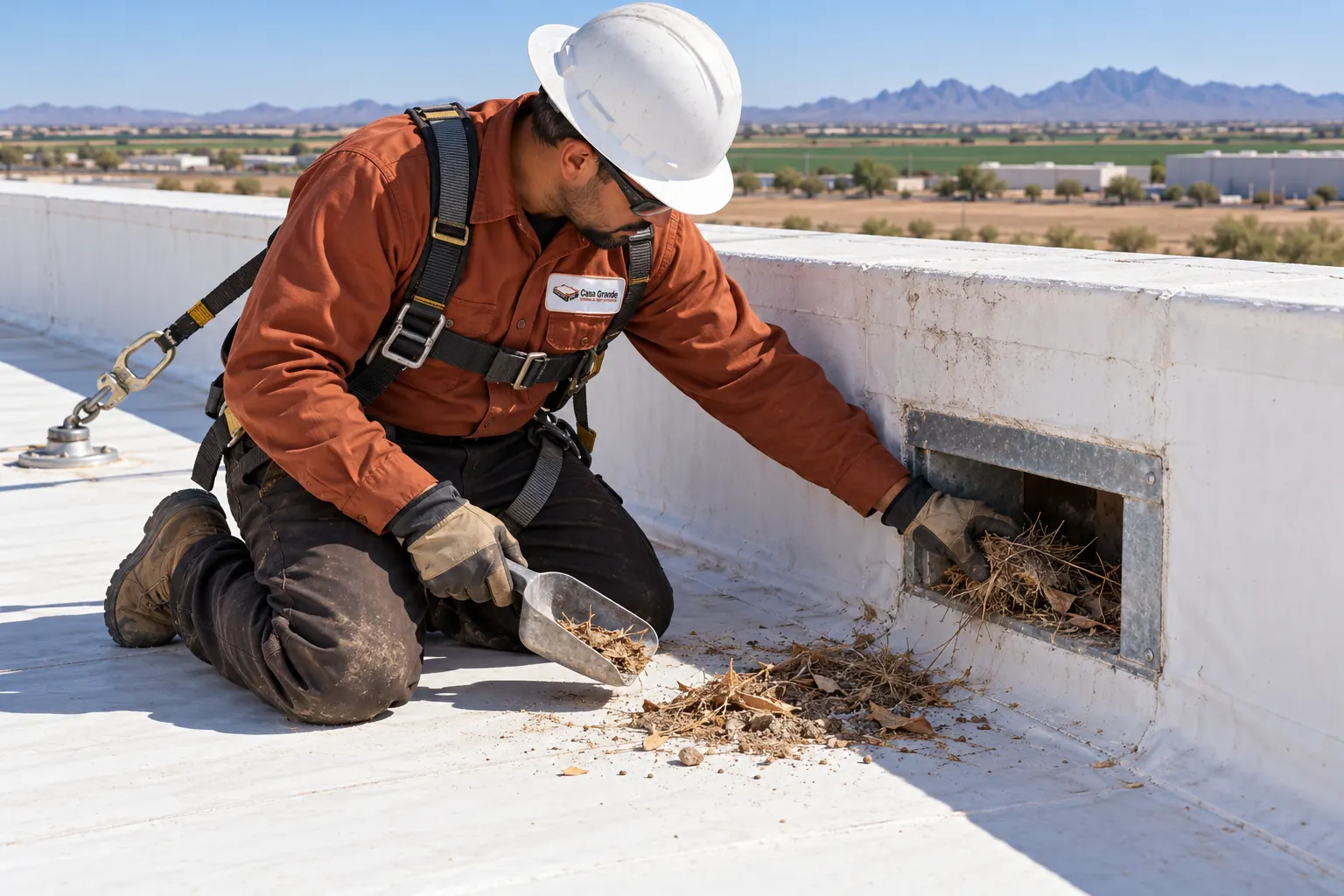
Dust, leaves, and debris in drains and scuppers, plus anything loose near the edges. Before June 15, also check vent boots and unit curbs for cracked sealant.
Both. Small community and retail roofs get the same inspection and the same detail work at vents, curbs, and drains as large ones. A small roof with one bad vent boot gets that boot replaced, and we point out anything else worth watching.
Tell us the building type and the days it is in use. We inspect on a quiet day and plan the work around your calendar.
Leave a name and number and we will call you back.
Or call now: +1 (623) 310-0221