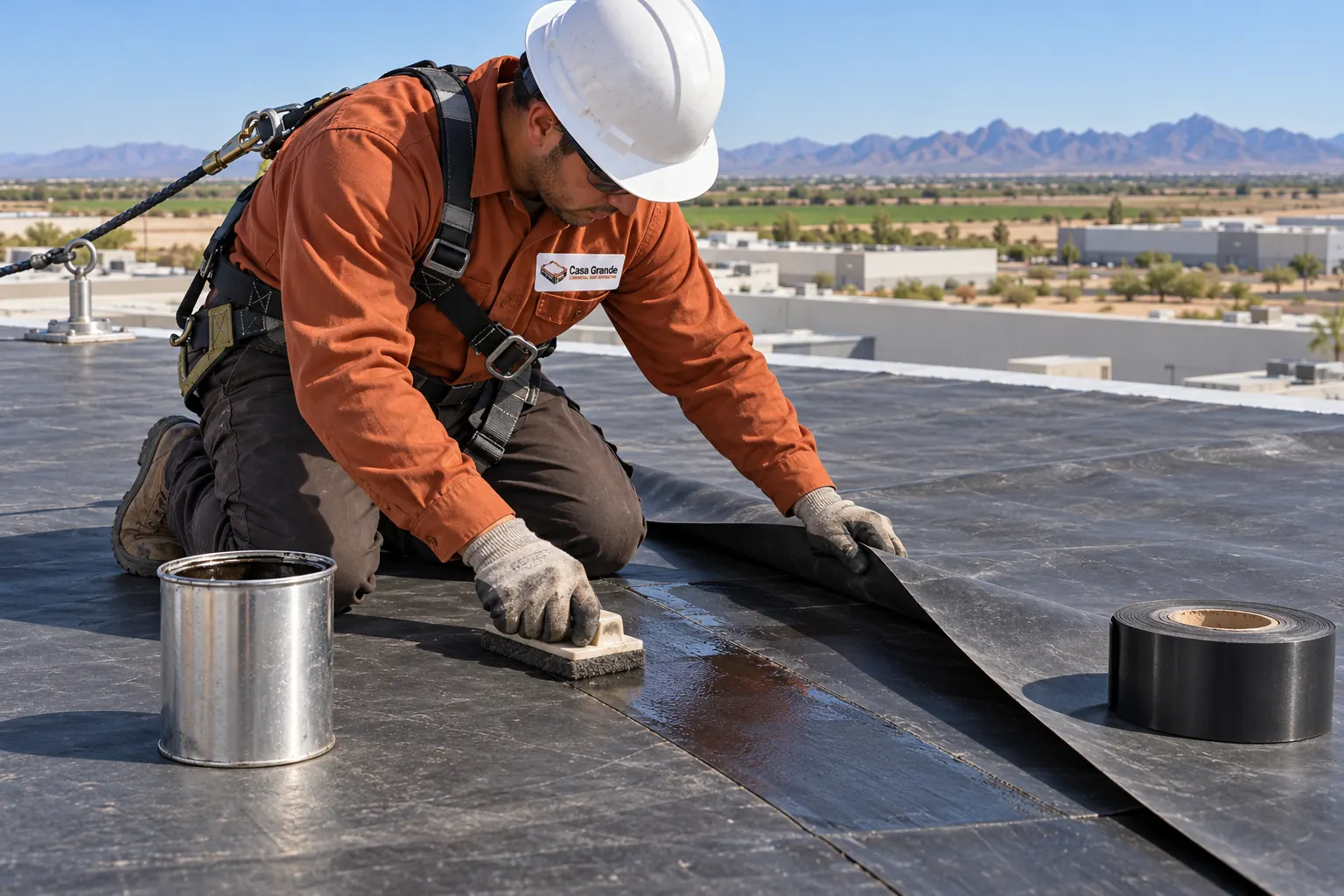
EPDM Roofing Contractor
Flexible membrane with taped laps that handles the odd corners, offsets, and old penetrations common on older roofs.
EPDM flat roof installation and repair
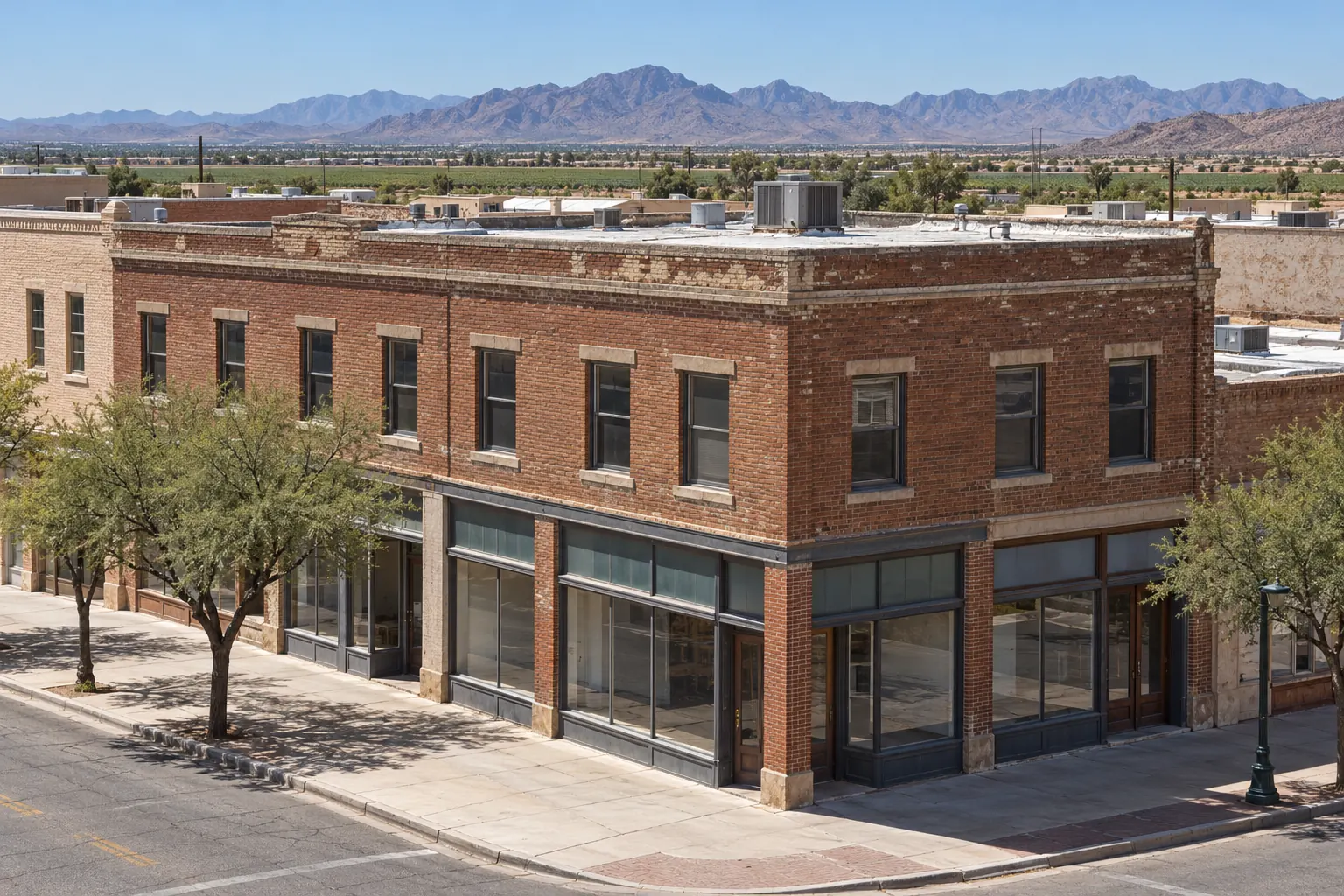
As a Florence commercial roofing contractor, we repair and replace low-slope roofs on historic downtown buildings and other commercial properties, planning around design review and tight streets.
Florence was founded in 1866, is the seat of Pinal County, and has a historic downtown listed as a National Historic District. Many older storefronts there have low-slope roofs hidden behind parapets.
The town's Historic District Advisory Commission reviews development inside the district, and its guidelines cover roofs and roof materials. Parapet caps, awnings, and any pitched sections draw the most attention because they are visible from the street.
Older masonry buildings leak in their own ways. These pairs trace the usual signs to the roof detail above.
Plaster or paint bubbles on the inside of the street-facing wall, high up near the ceiling.
Open Parapet Coping: Joints in the parapet cap have opened, so rain soaks into the masonry and works down the wall.
A ceiling stain forms mid-room, far from any wall or opening.
Clogged Through-Wall Scupper: A scupper is packed with dust and debris, so water ponds behind the parapet.
Diagonal cracks and stains appear where two walls meet under the roof.
Failed Base Flashing At The Wall: Membrane flashing up the inside of the parapet has split or pulled loose at the corner.
Drips show up inside along the storefront after storms with wind from the street side.
Loose Awning Or Canopy Flashing: Flashing where an awning or canopy meets the wall has pulled away, letting wind-driven rain run behind it.
Water appears beneath an older rooftop unit or an abandoned equipment stand.
Abandoned Curbs And Openings: Old curbs and openings from removed equipment were patched over instead of closed, and the patches have failed.
On historic and older downtown buildings, these four results matter most.
Sealed coping and new base flashing keep rain out of the parapet, so it stops soaking into brick and plaster.
Cleared and reflashed scuppers move water off the roof instead of letting it pond behind the parapet.
Parapet caps and other visible pieces are matched to the building and to what the district review allows.
Abandoned curbs and patched holes get decked over and flashed into the new membrane.
Most downtown roofs here are low-slope single-ply jobs. These two systems cover them.
Flexible membrane with taped laps that handles the odd corners, offsets, and old penetrations common on older roofs.
EPDM flat roof installation and repair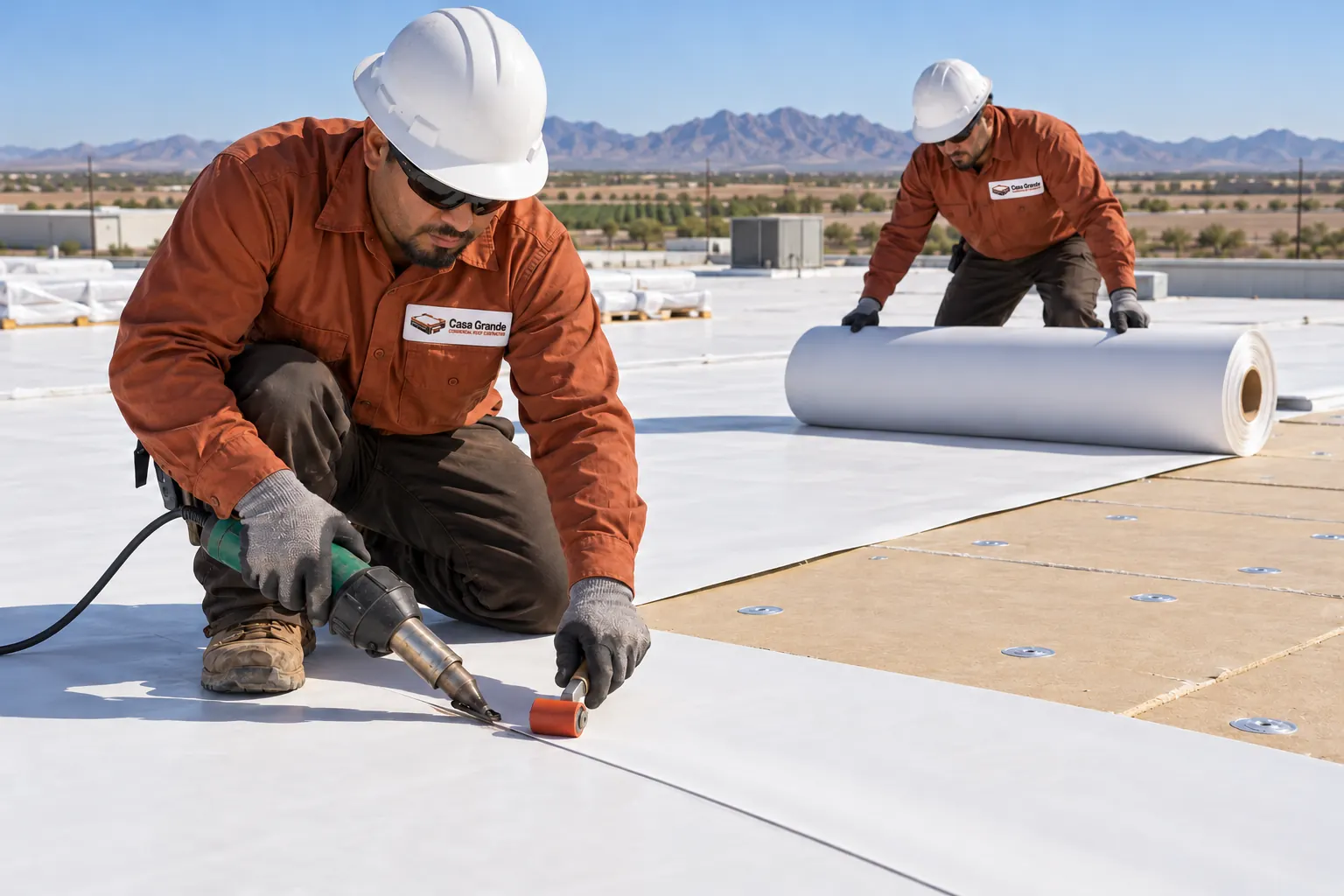
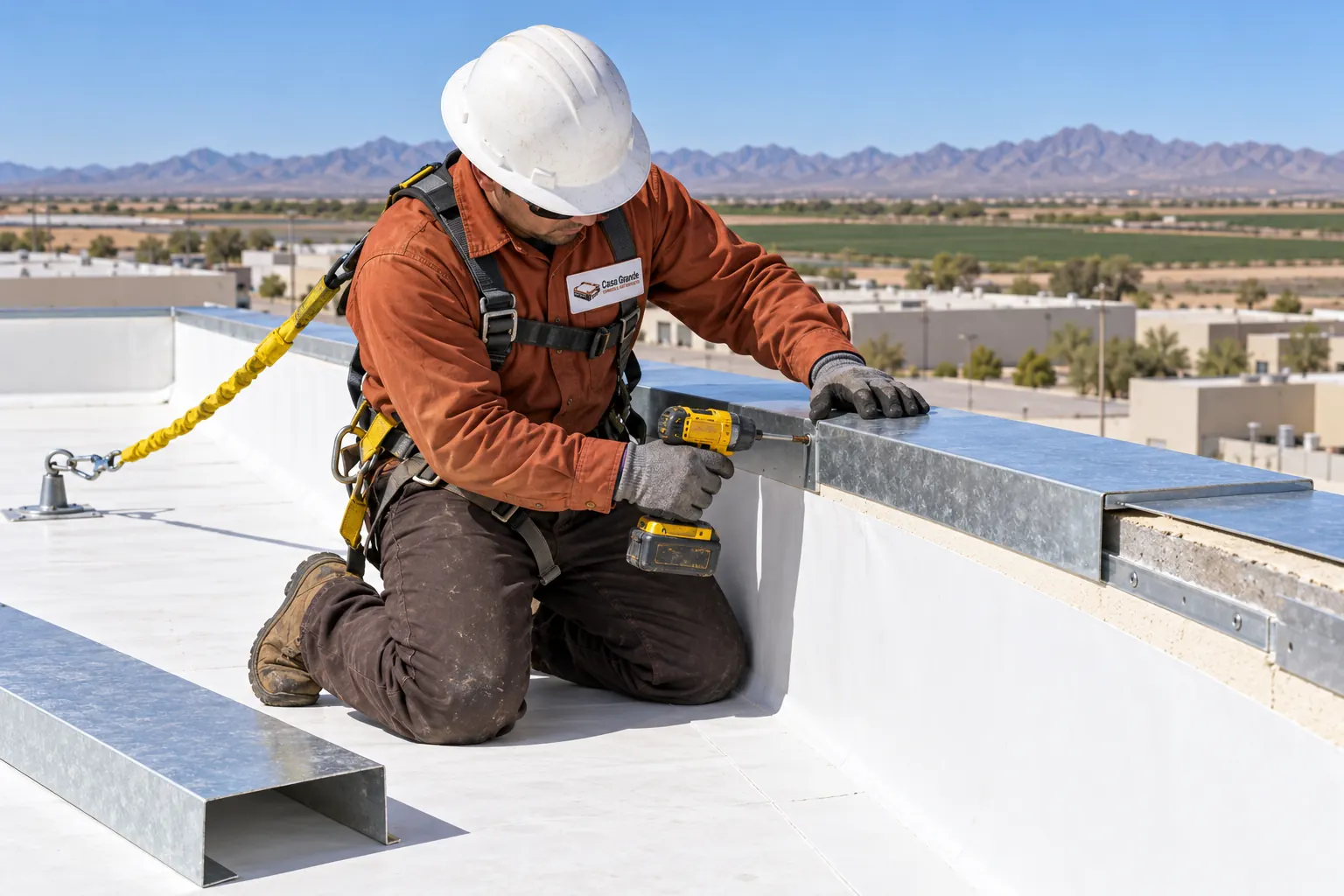
White heat-welded membrane for larger low-slope roofs, with base flashing run up the inside of the parapet.
TPO roofing in Casa GrandeCall and tell us which wall is wet and how high the stain sits. We start at the parapet coping and scuppers above it.
Five steps that fit roof work around district review and narrow downtown streets.
We check the membrane, parapet coping, base flashing, scuppers, and old curbs, and cut cores to see how many roof layers sit on the deck.
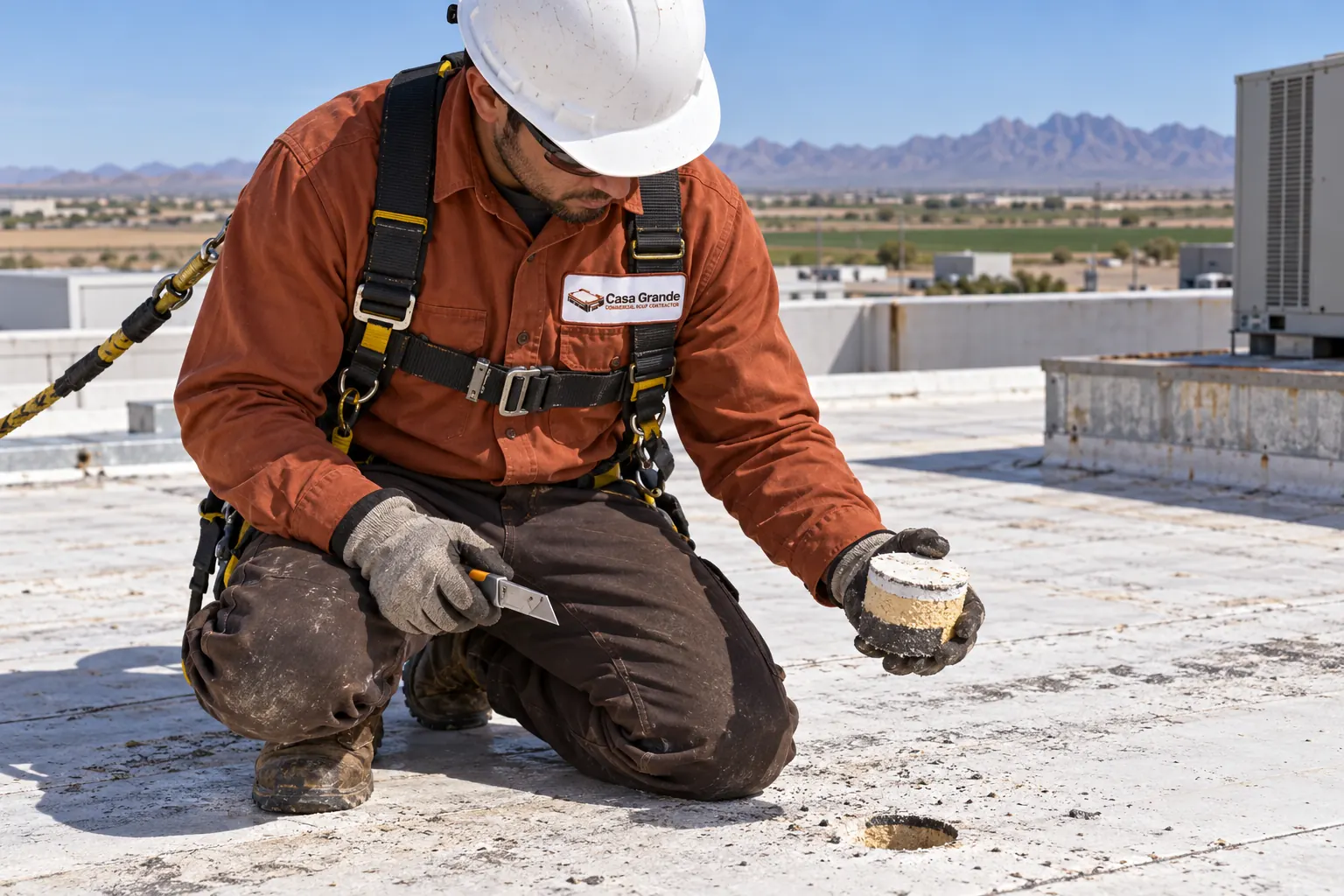
Your summary notes which visible roof pieces could involve the Historic District Advisory Commission, so permits and any review start early.
Lifts and roofing dumpsters go in alleys or side streets where the town allows, with neighbors and tenants told about loud days ahead of time.
Old layers come off where needed, the new membrane goes down, and base flashing and coping are rebuilt at every parapet and scupper.
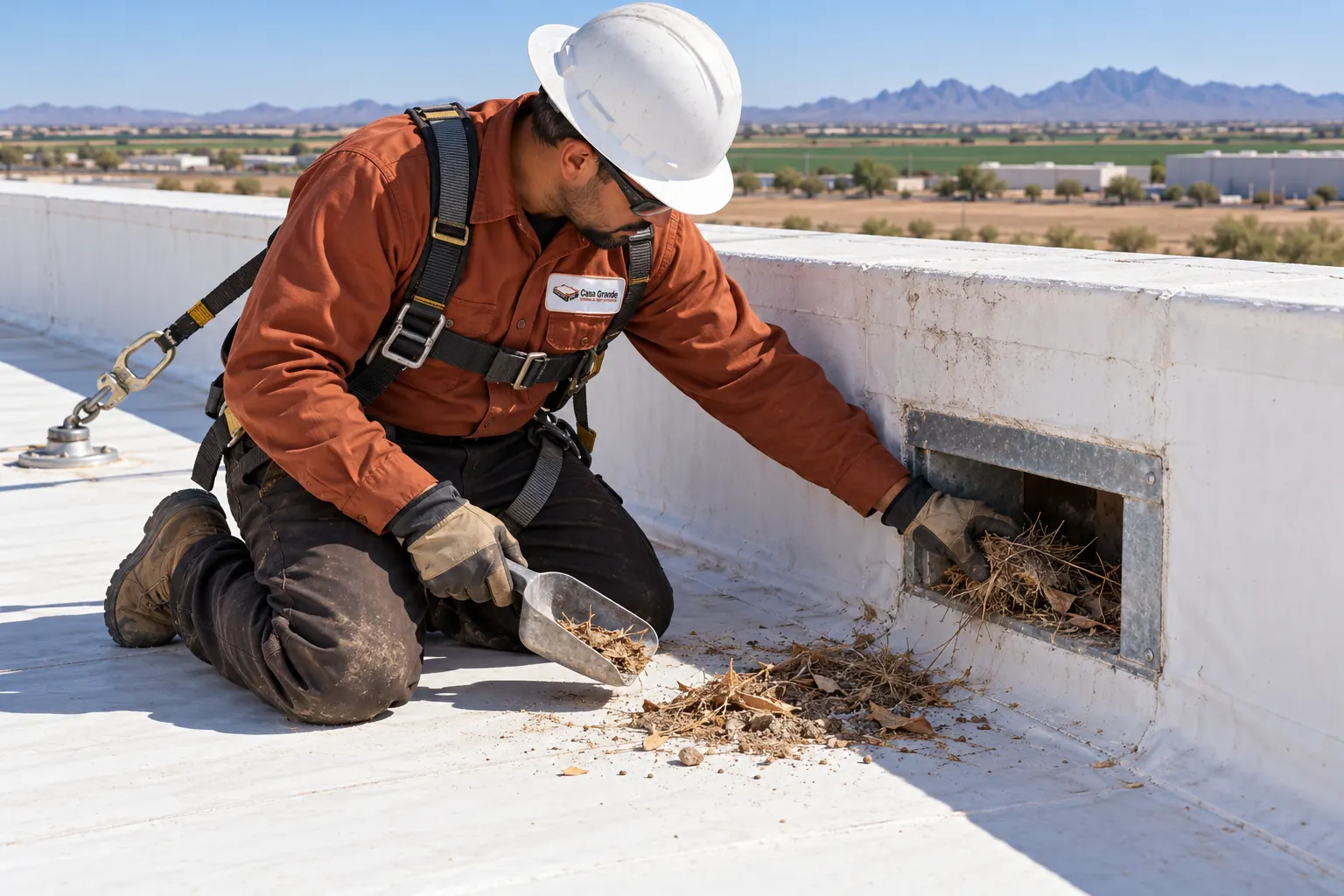
The final walk covers every coping joint, corner, and scupper with you, with photos for the building's file.
Florence is the northeast edge of our area. These are the closest towns we also cover.
West of Florence, with warehouse and plant roofs in four industrial parks.
Southwest, where the city also reviews roofing-material changes on designated landmark buildings.
South, where long metal panel runs cover shops and hangar-style buildings near the airport.
What Florence owners ask about roof work on older and historic buildings.
Yes, for properties inside designated historic districts or on landmark buildings. In Florence, the Historic District Advisory Commission reviews development inside the district, and its guidelines include sections on roofs and roof materials. Casa Grande requires a certificate before exterior changes to a landmark and treats a change in roofing material as an alteration.
The Town of Florence Community Development department, since Florence is an incorporated town. Buildings inside the historic district can also face design review, so we check both before scheduling work.
On most low-slope roofs hidden behind parapets, yes, since the membrane is out of sight. Visible elements like parapet caps, awnings, and pitched sections draw the attention, so those get matched with care. We confirm with the town whether your scope needs review before ordering materials.
Rain is probably getting into the parapet through open coping joints or failed base flashing, then soaking down through the masonry. Sealing the coping and rebuilding the flashing stops the source.
We plan staging around alleys and side streets, use a lift at set times, and keep the sidewalk clear. Material moves in small loads so the street stays usable, and debris goes down a chute into a covered container to keep dust off the sidewalk.
Abandoned curbs and patched openings are common leak sources. We remove what is no longer used, deck over the openings, and flash them into the new roof. A curb that will carry a new unit gets raised to the right height and reflashed.
A core cut shows every layer down to the deck. If two layers are already in place, codes limit adding another, so the old roofing comes off.
Yes. We roof commercial buildings anywhere in Florence. Outside the district, the work follows the town's standard building permit process.
Tell us the address and where water shows inside. We inspect the roof and parapets and note any review steps.
Leave a name and number and we will call you back.
Or call now: +1 (623) 310-0221