Industrial Roofing Contractor
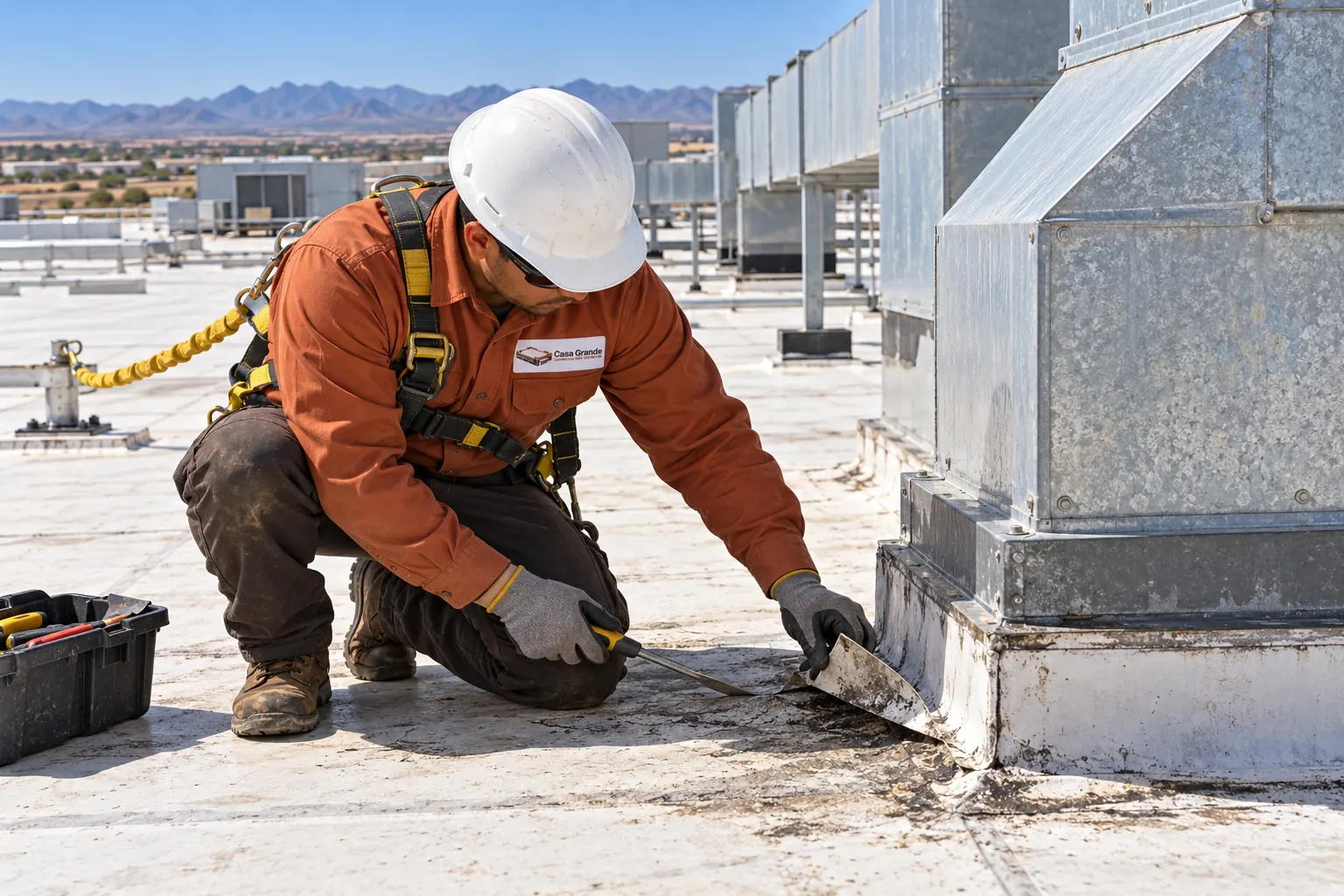
Plants under metal roofs with exhaust fans and ducts need curb work and walk paths planned around production.
industrial roofing for plants and warehouses
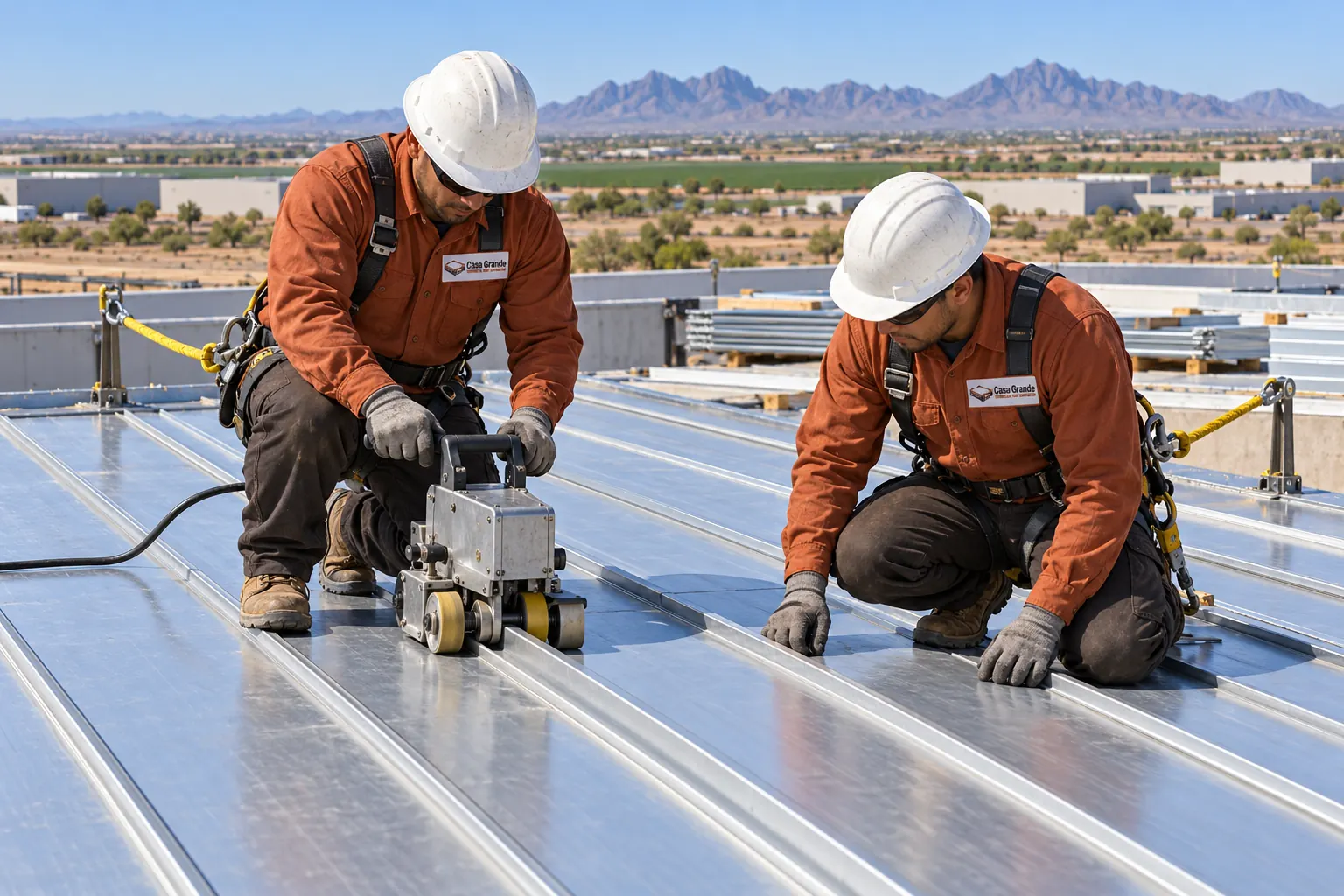
We are a commercial metal roofing contractor in Casa Grande, installing standing-seam panels and restoring exposed-fastener roofs on shops, ag buildings, and warehouses.
Fastener and washer replacement
Standing-seam and screw-down panels
Retrofit framing over flat roofs
Metal work splits into restoring the panels you have or putting new metal on. These signs point each way.
Metal roofs leak at fasteners, laps, and trim long before the panels fail. Here is how those spots show up indoors.
Water lands in a straight row under a structural member, often after the first rain of the season.
Backed-Out Fasteners: Thermal movement walks screws loose, and the dried washer under each head stops sealing the hole.
Brown streaks run along the inside of a panel lap or down a wall girt.
Rust At Panel Laps: Water held between overlapping panels corrodes the lap, and the rust spreads from the inside out.
Staff hear rattling at the eave or ridge when outflow winds come through.
Loose Ridge And Eave Trim: Trim fasteners have pulled, and the sealant behind the ridge cap has failed, letting wind-driven rain in.
A vent stack, exhaust fan, or skylight frame drips around its base during rain.
Failed Penetration Sealant: Sealant around pipe flashings and curb bases on the panels has cracked from sun and movement.
Moisture beads and falls from the panels early in the day, even with no rain overnight.
Torn Insulation Facing: Damaged facing under the panels lets humid indoor air reach cold metal, which is condensation instead of a roof leak.
Four scopes cover most commercial metal roofs, from restoration to new panels over a flat roof.
| Scope | When it fits | What it involves |
|---|---|---|
| Fastener and seam restoration | Panels are solid, with leaks at screws, laps, and trim | Fastener replacement, new washers, butyl tape and sealant at laps, and new trim fasteners |
| Restoration with reflective coating | Panels show surface rust and the owner wants a brighter roof | Rust treatment, seam sealing, primer, and a reflective coating over the panels |
| New standing-seam panels | Panels are rusted through or bent, or the building is being upgraded | Removal, new underlayment or insulation, and seamed panels on concealed clips |
| Retrofit framing over a flat roof | A low-slope roof holds water and keeps leaking | Framing fastened through the old roof to the structure, then sloped metal panels |
Metal pays off over a long service life when its fasteners, laps, and trim stay tight.
Metal roofs often last 40 years or more when fasteners and sealants are kept up, longer than most membranes.
Many older panel roofs come back with fastener replacement, seam sealing, and a reflective coating for less than new metal.
A light factory finish or reflective coating keeps panels cooler in afternoon sun.
Retrofit framing turns a ponding flat roof into a sloped metal roof that sheds monsoon rain to the gutters.
Call and tell us whether the drips follow a line or sit near a vent. Loose fasteners and laps are the usual source on metal.
Restoration and new panels share the same five steps. The inspection decides which path the rest of the job follows.
We check every fastener row, panel lap, ridge, and penetration, test how firmly panels are attached, and note rust that has gone past the surface.
Your summary shows which panels can be restored, which need replacing, and whether retrofit framing makes sense on a flat section.
Loose or stripped screws come out, larger fasteners with new washers go in, and rust is cleaned and primed before anything covers it.
Side laps get butyl tape and sealant on a restoration, while new panels are set on clips and closed with an electric seamer.
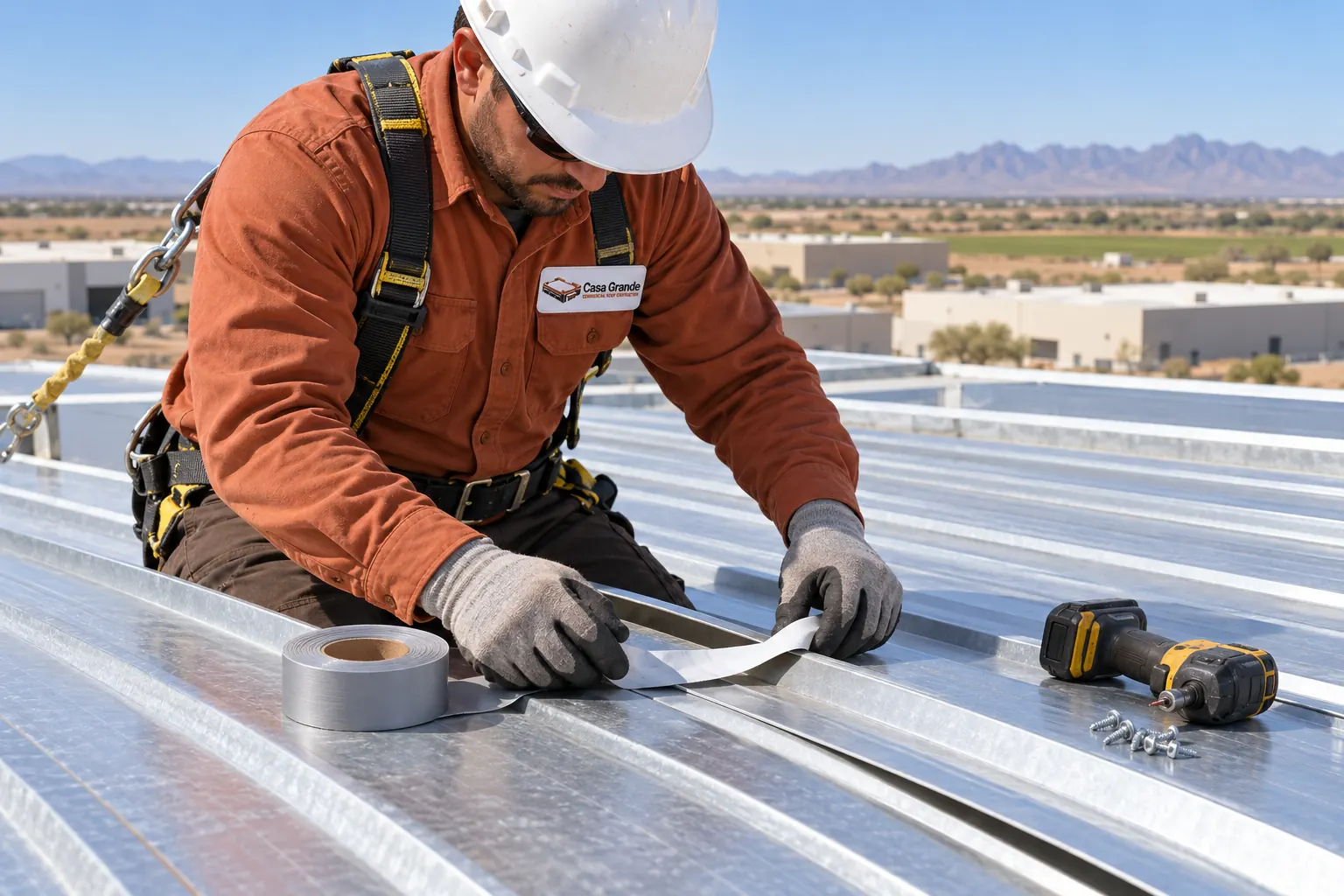
Reflective coating goes on where specified, trim and penetrations get fresh sealant, and the final walk covers every lap with you.
Two other systems often sit on or beside metal buildings.
Plants under metal roofs with exhaust fans and ducts need curb work and walk paths planned around production.
industrial roofing for plants and warehouses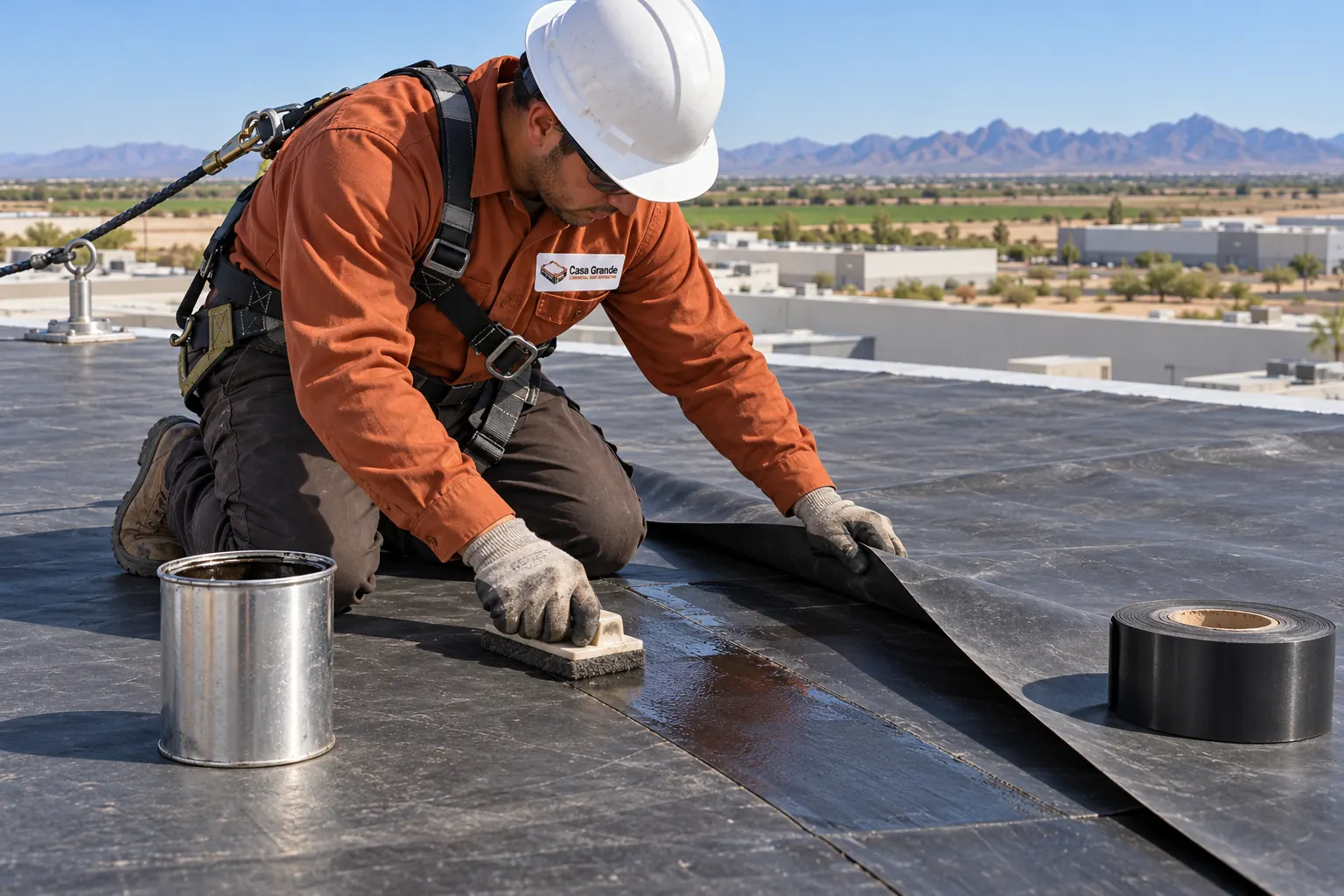
Low-slope additions on metal buildings often carry EPDM, with taped laps that move with the joint between the two roofs.
EPDM flat roof installation and repairAnswers about new metal roofs, restoration, and retrofits.
Yes. We install and restore standing-seam and exposed-fastener roofs on shops, ag buildings, warehouses, and newer commercial buildings. Older panels usually need new fasteners and washers, rust treatment at laps, and fresh sealant at ridges and penetrations, and many then take a reflective coating. Badly rusted or bent panels get replaced.
Standing-seam panels attach with hidden clips and raised seams, so the weather surface has no screw holes. Exposed-fastener panels are screwed through the face, which costs less up front but leaves hundreds of washers that age and need replacing.
The inspection tells you. Straight, firmly attached panels with surface rust are good restoration candidates. Rust holes, crushed panels, or rust running through the laps across large areas point to new panels.
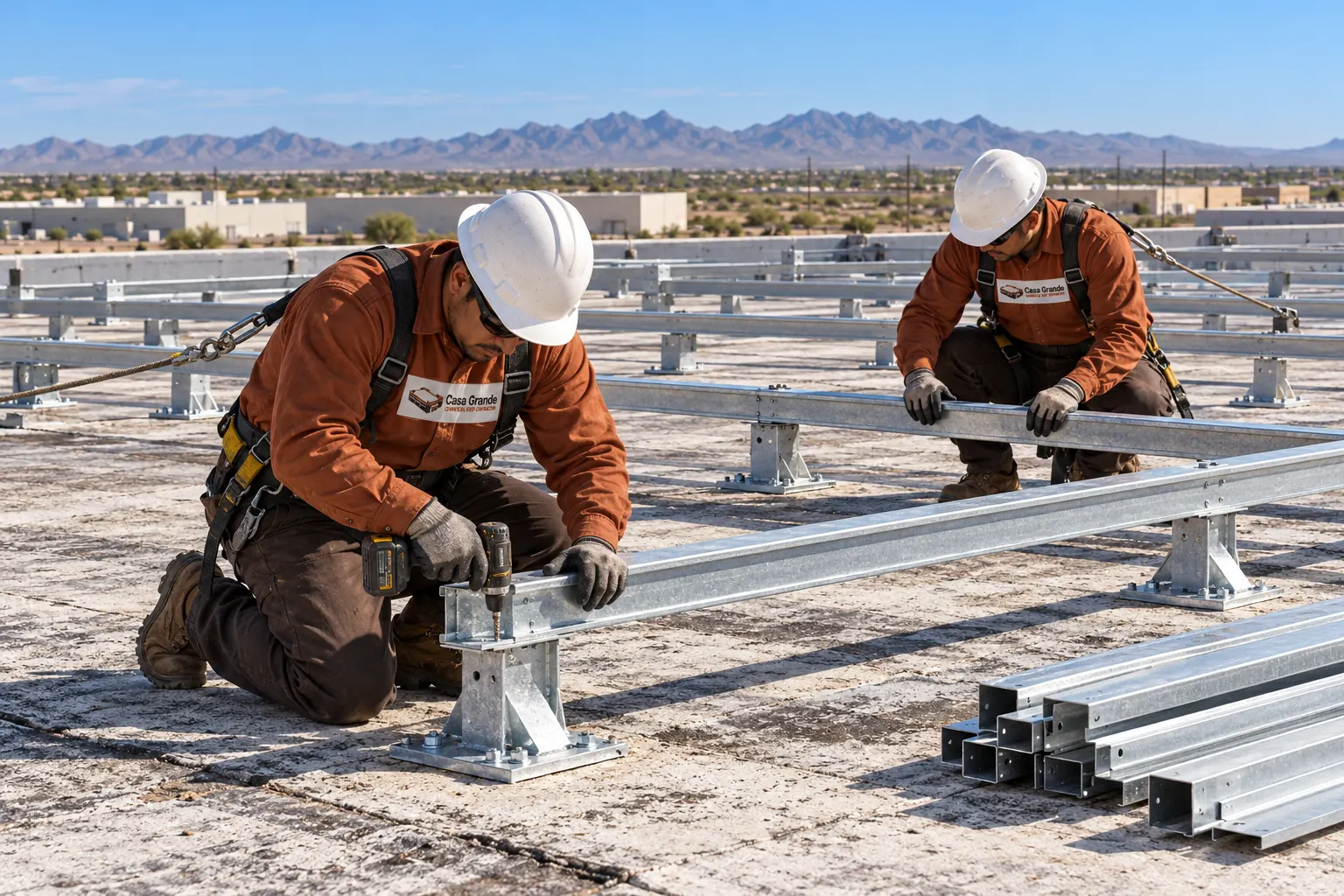
Framing is fastened through an old flat roof to the building structure, and new metal panels go on top with built-in slope. It ends ponding on roofs that have leaked for years, without tearing off the old roof first.
That is often condensation. Warm, humid air inside meets cold metal and turns to water. Torn insulation facing or poor ventilation is the usual cause, and the fix is inside the building instead of on the roof.
Metal sheds rain fast and holds up well to wind when trim and fasteners are tight. Hail can dent panels, which is cosmetic unless seams or coatings are damaged. Checking trim fasteners before June 15 gets the roof ready for monsoon season.
Check them every year and after strong storms. On exposed-fastener roofs, washers dry out and screws back out over time, so a fastener row that looked tight a few years ago can be loose today.
Tell us the building type and whether the panels are standing-seam or screwed down. We inspect every row and lap first.
Leave a name and number and we will call you back.
Or call now: +1 (623) 310-0221