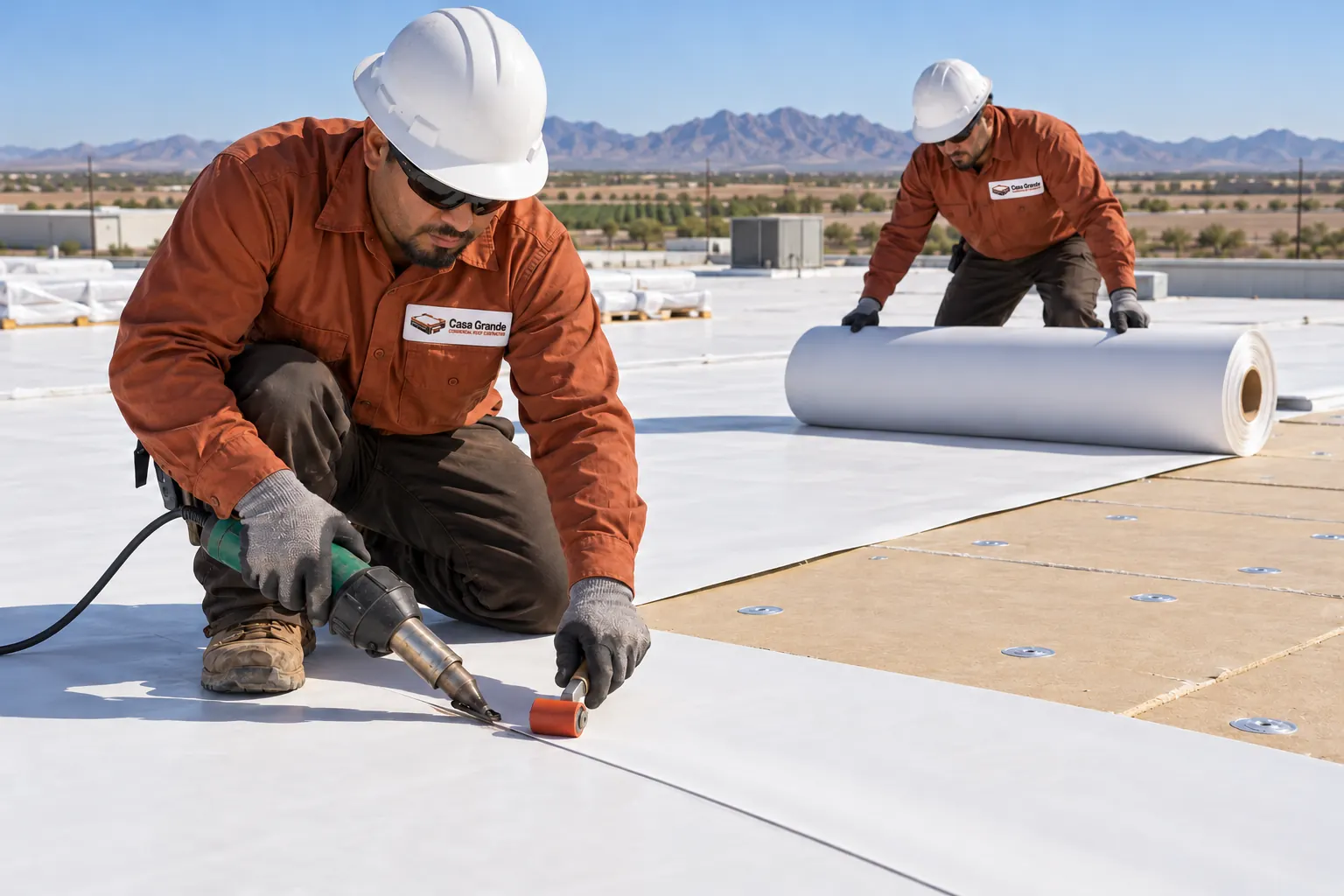
TPO Roofing Contractor
Wide roofs over air-conditioned space often move to white TPO, with heat-welded laps in place of taped seams.
TPO roofing in Casa Grande
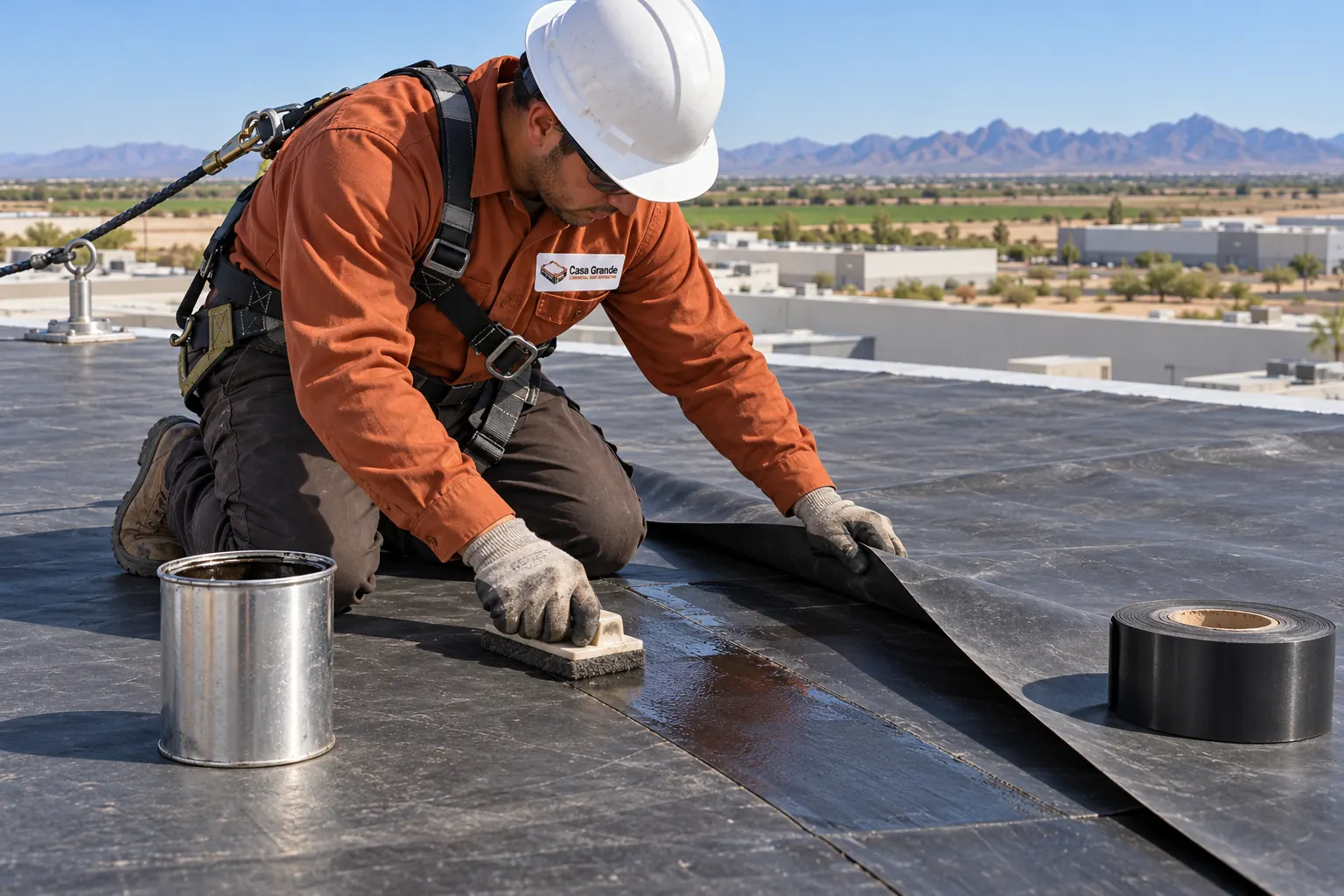
We are an EPDM roofing contractor in Casa Grande, installing, repairing, and coating rubber membrane roofs on retail strips, offices, and plants with many penetrations.
Taped laps primed by hand
White-on-black or coated surfaces
Seam tape and flashings checked first
EPDM suits roofs that move and roofs crowded with small penetrations. Here is how we sort a good candidate from a roof that needs something else.
EPDM tends to fail at its seams and flashings long before the field sheet wears out. These pairs show where.
Water traces down an inside corner where the roof meets a parapet or a taller wall.
Flashing Pulled By Shrinkage: Aged EPDM shrinks and tugs base flashing away from the wall, leaving a gap at the corner.
A ring forms on the ceiling right under a restroom or kitchen vent stack.
Split Pipe Boot: The rubber boot around the vent has cracked from UV, or its clamp has loosened, and rain runs down the pipe.
Several small stains appear in a line across the ceiling, a few feet apart.
Lifting Seam Tape: Seam tape and adhesive wear from UV and dust abrasion until the lap edges curl up and let water in.
Rooms under the roof stay hot into the evening, and thermostats get turned lower to compensate.
Black Membrane In Full Sun: Standard black EPDM absorbs heat, which is why many owners here pick white-on-black sheet or a reflective coating.
Tiles sag or crumble away from the walls, under the lower areas of the deck.
Water Trapped Under The Sheet: A puncture or open lap lets water into the insulation, where it spreads under the membrane and softens the boards.
EPDM work falls into four scopes, from a seam repair to full replacement.
| Scope | When it fits | What it involves |
|---|---|---|
| Seam and boot repair | Leaks come from lap edges, pipe boots, or a few corners | Cleaning and priming the lap, new seam tape or cover strip, new boots and clamps |
| Reflective coating over EPDM | The field sheet is solid and the black surface heats the space below | Seam repairs, cleaning, an EPDM primer, and a white coating over the sheet |
| New white-on-black EPDM | Replacement is due and the owner wants a cooler surface | Removal where needed, new insulation, and white-on-black sheet with taped laps |
| Tear-off and replace | Wet insulation is widespread or the sheet has shrunk badly | Removal to the deck, deck repairs, new insulation, and new EPDM |
EPDM earns its place through flexibility and simple repairs. Four results to expect.
EPDM membrane tolerates movement from big day-to-night temperature swings without cracking, which matters on buildings that flex.
Punctures and lap edges get cleaned, primed, and covered with compatible tape, so small damage gets fixed quickly.
Pre-formed pipe boots and flashing fit closely around vents, which suits roofs with many small pipes.
White-on-black sheet or a reflective coating over EPDM cuts the heat a plain black surface pulls into the building.
Call and tell us which pipe or wall corner sits above the stain. Split boots and pulled flashing are the usual EPDM culprits.
Seams and flashings decide whether an EPDM roof stays dry, so most of the work happens at the details.
We pull on lap edges, check every boot and wall flashing for shrinkage, and cut cores where the sheet feels soft underfoot.
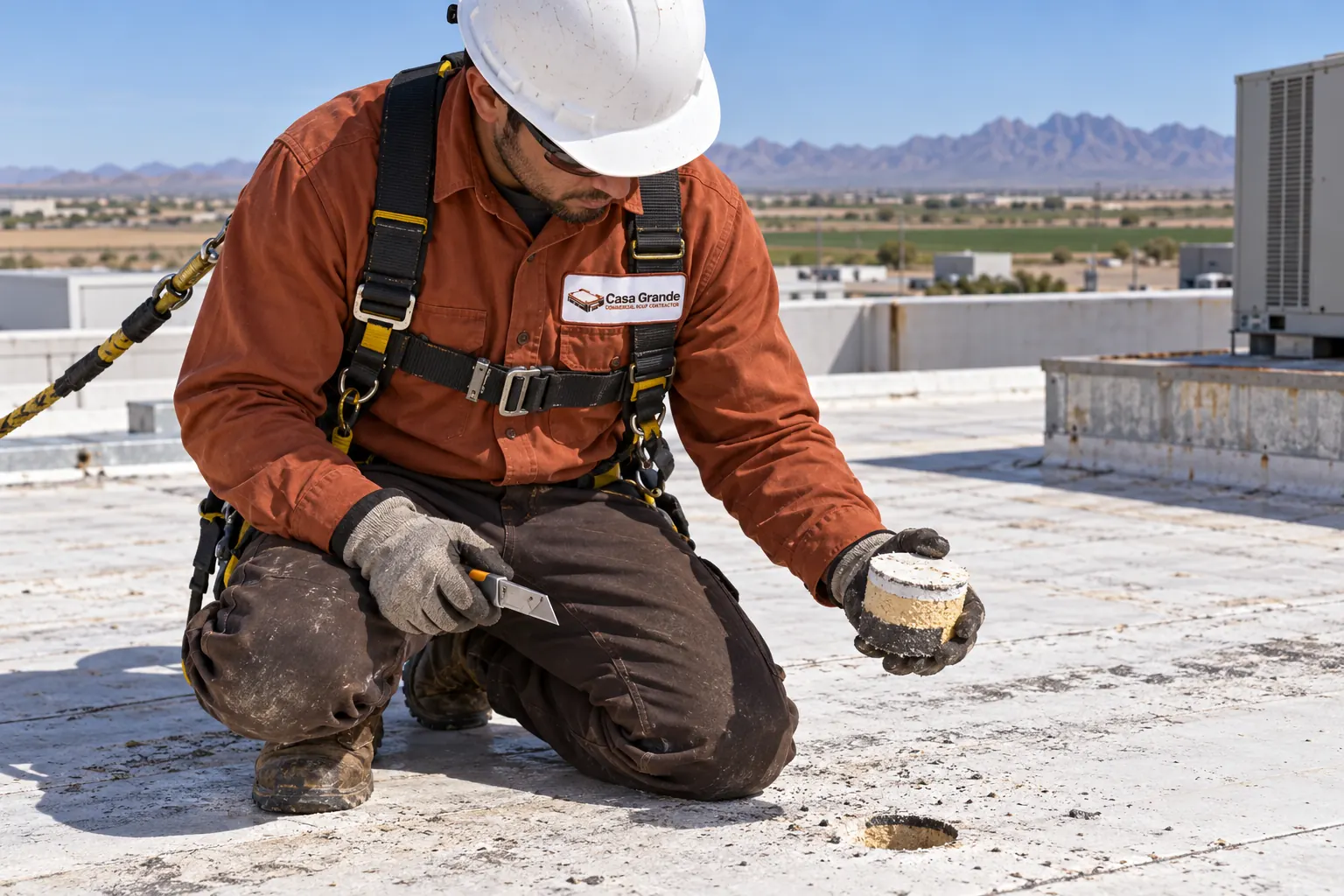
The summary weighs seam repairs, a reflective coating, and new sheet against the condition of the field membrane and the insulation below.
Laps and flashing areas get scrubbed and primed so seam tape and adhesive bond to clean rubber instead of chalk and dust.
New seam tape, cover strips, and pre-formed boots go on, and corners get fresh base flashing tied into the wall.
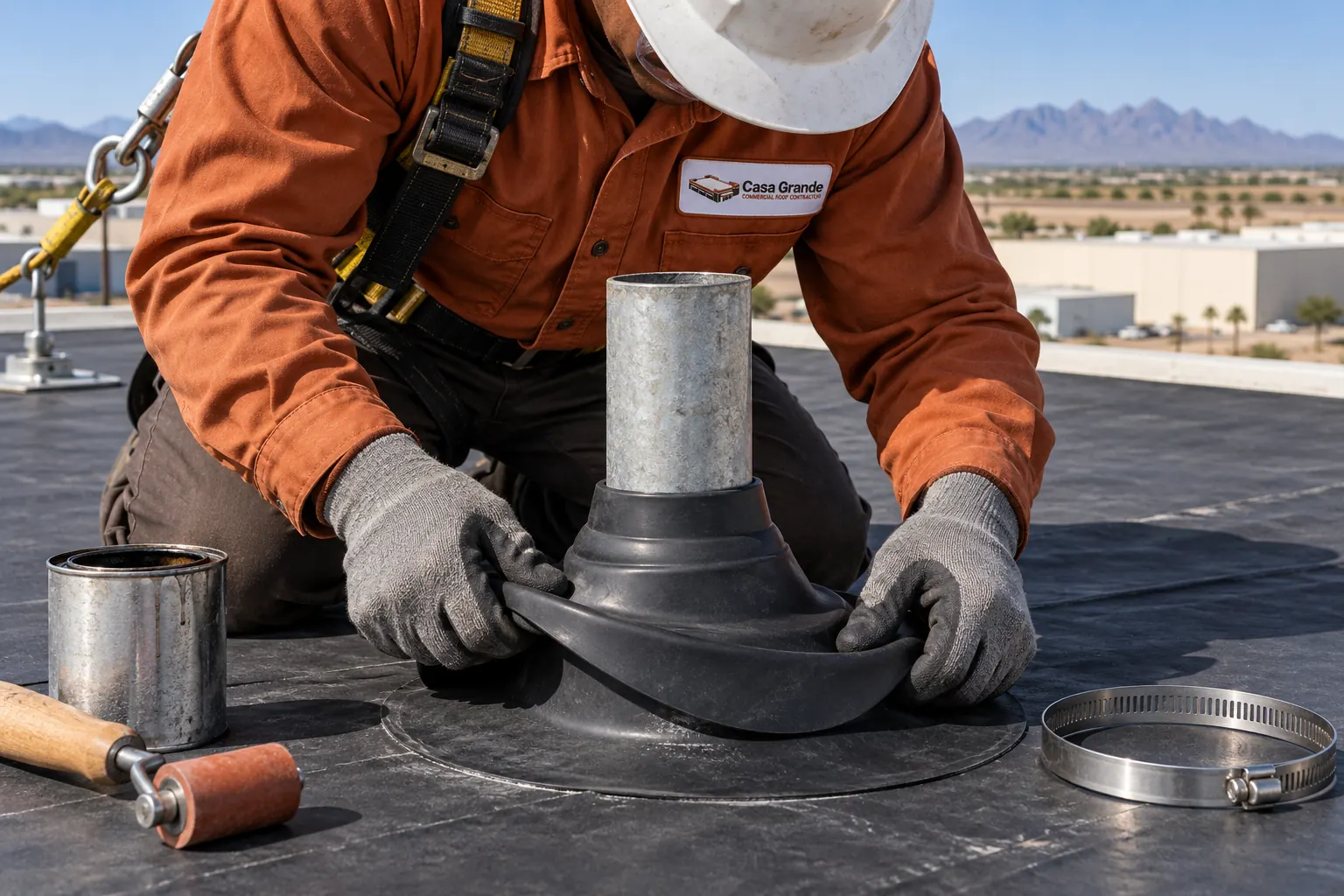
Before sign-off, every lap edge, boot clamp, and corner is checked again with you on the roof and photographed for your file.
Two other systems sometimes fit an EPDM building better.
Wide roofs over air-conditioned space often move to white TPO, with heat-welded laps in place of taped seams.
TPO roofing in Casa Grande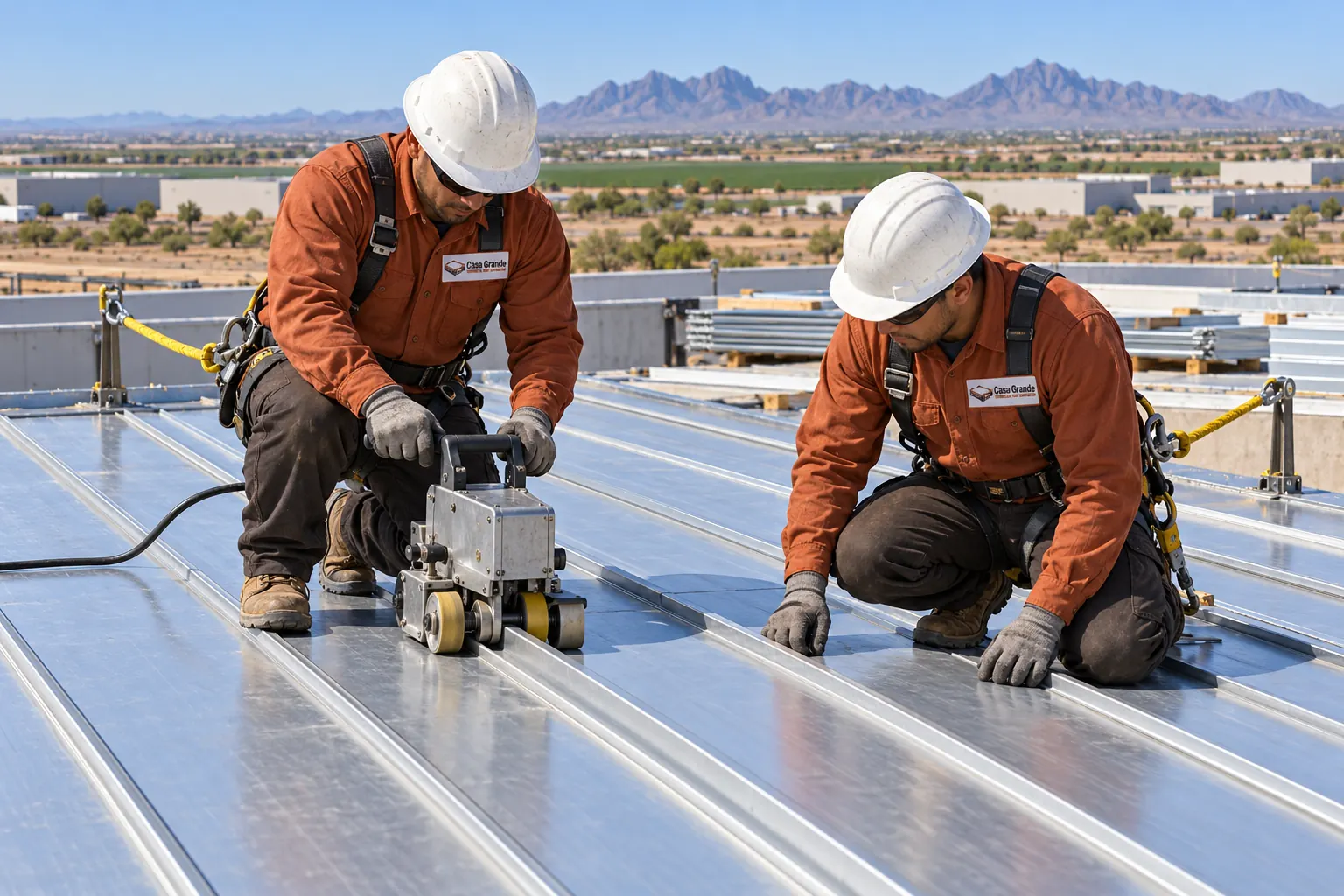
Low-slope roofs that hold water can take a metal retrofit, where framing adds slope before new panels go on.
commercial metal roof restorationWhat owners ask about EPDM roofs in Pinal County heat.
It can be, especially when the building needs a flexible, proven membrane at a moderate cost. EPDM handles big day-to-night temperature swings without cracking. Since standard black EPDM absorbs heat, many owners here choose white-on-black sheet or a reflective coating over it.
Twice a year, in spring before monsoon and in fall after it, plus after a big storm. Seam tape and flashing adhesives wear out from UV and dust well before the rubber field sheet does, so the laps are where problems start.
Yes, when the sheet is solid and the insulation is dry. Seams get repaired first, the surface is cleaned, and a primer made for EPDM goes down before the white coating so it bonds to the rubber.
Age and heat. Over many years the sheet slowly shrinks, pulling on corners and base flashings until they tent away from walls and curbs. The fix is new flashing with enough slack, or new sheet if shrinkage is severe.
It adds heat. A dark surface gets much hotter in summer sun than a white one, and some of that heat reaches the space below. White-on-black EPDM or a reflective coating reduces it.
With primer and seam tape. The lap is cleaned and primed, tape is set and rolled, and the edges get a lap sealant. Older roofs sometimes have glued laps, which we repair with tape and cover strips.
Usually, yes. When leaks trace to boots, corners, or a few laps and the insulation is dry, targeted repairs extend the roof. Widespread wet insulation or heavy shrinkage changes that answer.
Tell us where the stains are and what pipes or units sit above them. We inspect the seams and flashings and summarize the options.
Leave a name and number and we will call you back.
Or call now: +1 (623) 310-0221